What AI Can't Replace in Video Marketing: Why Human Creativity Wins
AI video tools are fast, but they cannot replace taste, trust, or performance instinct. Here is where human creativity still wins in video marketing, and where AI actually belongs in a production workflow.
AI video tools got good, fast. Type a prompt, get a moving image. For rough storyboards, quick social fills, and internal mockups, that speed is genuinely useful. But the moment a video is supposed to sell something, a real commercial, a product launch, a brand anthem, the shortcut quietly becomes the liability. The brands winning right now are the ones drawing a hard line between where AI helps and where only humans can deliver.
Here is what no model can replace, and why human creativity still wins in video marketing.
Taste Is Not a Prompt
Anyone can generate a beautiful frame. Not everyone can generate the right frame. The difference between a video that converts and one that merely looks polished comes down to a thousand small judgment calls: which face reads as trustworthy on camera, how long to hold a shot before the audience's attention drifts, which line of dialogue to cut even though the client loved it. A creative director brings years of watching real audiences respond to real work. AI optimizes for what looks plausible. Humans optimize for what actually works.
Casting is the clearest example. A great commercial actor does something a synthetic face cannot: they carry micro-expressions, hesitation, warmth, the tiny imperfections that tell a viewer this person is real. When your product is in their hands, that credibility transfers to the brand. AI performers flatten all of that into something technically smooth and emotionally empty.
Trust Is the Whole Game
A product video has one job: make the viewer believe. Real filmed footage protects product accuracy, the actual color, the true texture, the way the item genuinely moves in someone's hands. AI invents details, and customers notice when what arrives does not match what the video promised. Every mismatch is a return, a bad review, or a lost repeat buyer.
Regulation has now made this a legal question too. California SB 1050, signed on September 16, 2026, requires clear disclosure on any ad using AI-generated performers, and ads that violate the rule are banned. On top of that, Amazon, TikTok, and Meta all flag AI-generated content, and flagged content gets less reach and less trust. Filmed video avoids the entire problem: it is real, it is verifiable, and no disclaimer is needed. That is why Envy Creative produces every client video with real cameras, real talent, and real sets, never AI-generated video.
Performance Instinct Cannot Be Prompted
Video marketing is not filmmaking for its own sake. It is persuasion with a budget. Knowing what to film matters more than knowing how to film it, and that instinct is built on campaign data, audience psychology, and a few hundred rounds of feedback from founders who needed revenue, not reels.
A human director reads the room on set. They notice when a take is technically perfect but emotionally dead, and they push for one more. They restructure a script at 9 PM because the shoot ran long and the hero shot got cut. AI tools do not know what your conversion rate needs. They cannot feel when a moment lands. That feel is the entire margin between content and advertising.
Where AI Belongs in a Real Production Workflow
This is not an anti-AI argument. Smart production teams use AI every week, just behind the camera, not in front of it. AI is excellent at pre-visualization and concept boards, at generating rough animatics before the shoot day, at transcribing interviews and drafting captions, and at resizing and versioning finished spots for every platform. Used that way, it makes human work faster without touching what the audience sees.
The rule is simple: AI can plan the work, but people do the work that earns trust. The moment a synthetic frame is the thing your customer is asked to believe, you have traded the one asset advertising cannot afford to lose.
The Work That Still Requires a Crew
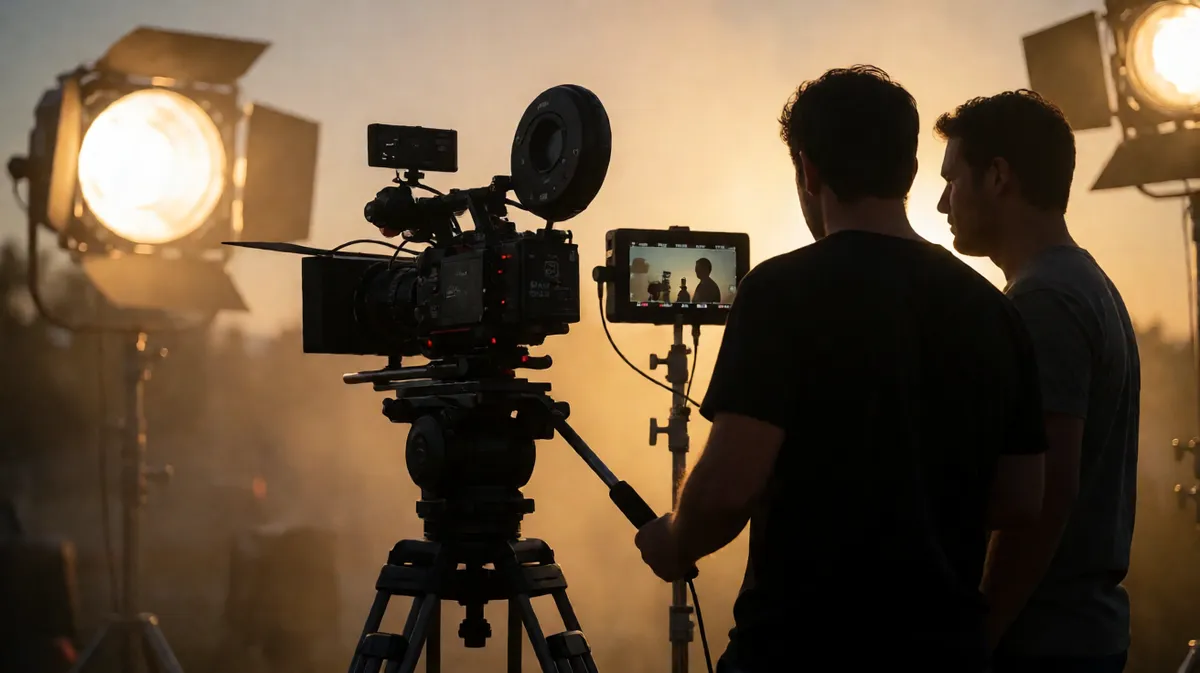
Run through what a real commercial needs and count how much of it is human: the concept that ties the brand to a feeling, the casting director who finds the face, the cinematographer who shapes the light, the sound designer who makes a room feel alive, the editor who knows exactly where to cut for pace. Every one of those roles is judgment, taste, and experience. None of them is a render queue.
That is also why professional production still pays for itself. When the video carries your launch, your ad spend, or your brand reputation, the cost of getting it wrong dwarfs the cost of doing it right the first time. Real talent, real sets, and real direction produce assets you can run for years across every channel, not disposable clips that age the week a new model drops.
Human Creativity Wins
AI will keep getting better at generating frames. It will not get better at knowing which frame your customer needs to see. That job belongs to the people who study audiences, direct performances, and stand behind the camera making a thousand calls a day. When you are ready to make video that actually moves the needle, work with a team that films it for real. Envy Creative builds commercials, explainer videos, and product videos with real people and real craft, the kind that earns trust instead of asking for it.