OpenArt AI Video vs. Envy Creative: What AI Can and Can't Do for Your Brand
OpenArt generates images and short clips from prompts, which is useful for concepts and storyboards. Here is where AI generation helps, where it misrepresents products, and why filmed video still wins for ads and listings.
OpenArt is an AI platform that generates images and short video clips from text prompts, while Envy Creative films real actors holding your real product in a real studio. If you need a quick visual concept or a mood board, OpenArt can help you explore ideas in minutes. If you need a product video that shows exactly what a buyer will receive, builds trust, and can run as a paid ad, a filmed production is the safer choice.
Buyers have learned to spot synthetic hands, shifting product labels, and faces that do not quite move like people, and platforms now flag AI generated content. A generated clip can misrepresent size, color, texture, or how a product works, and that gap is where returns and bad reviews start.
What is OpenArt and what does it do well?
OpenArt brings together many AI image and video models in one place, so a marketer can type a prompt, pick a style, and generate artwork, storyboards, and short synthetic clips without a camera or a crew. Used well, it is a sketching tool. You can test 10 opening frames for an ad, visualize a set before you build it, or show a client what a scene might feel like before anyone commits a production budget.
Those strengths are real. Storyboards and rough concepts are cheaper to change than a shoot day. The problem starts when the sketch becomes the finished ad. A generated product rarely matches the shipped product, a generated person cannot truly use your product, and a generated demonstration cannot prove anything works in the real world.
What can OpenArt not do for a product brand?
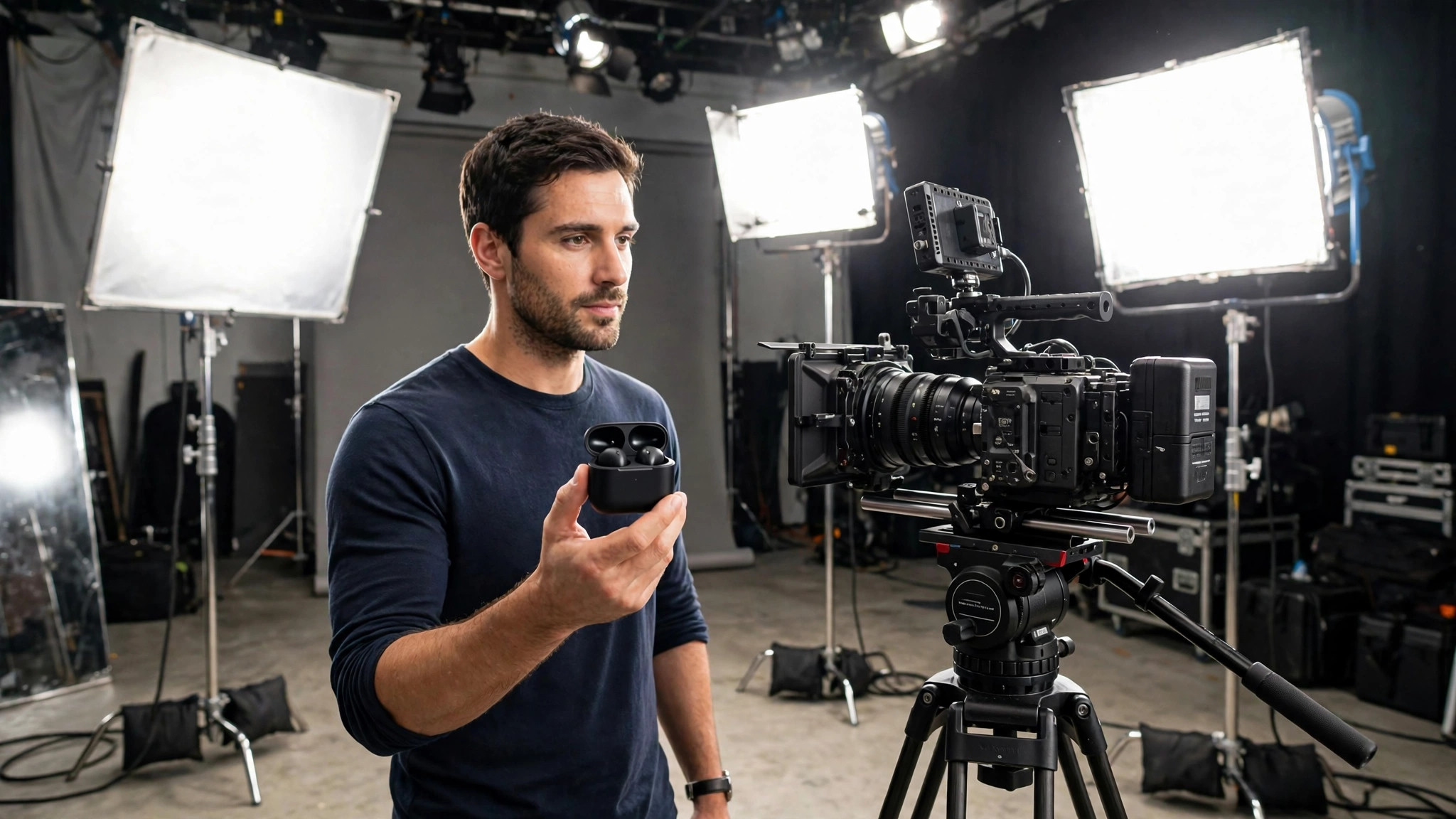
It cannot hold your product. That sounds simple, but it is the whole job of a product video. A buyer wants to see the actual bottle, shoe, gadget, or supplement in a real hand, at real scale, under real light, being opened, worn, poured, or plugged in. When Envy Creative films in its 5,000 square foot studio in Simi Valley, California, the product on screen is the product that ships, filmed with professional talent, real locations, and platform ready editing.
- Product accuracy, because the label, color, proportions, and materials on screen match what arrives at the door.
- Real demonstration, because an actor can actually use the product, react to it, and show cause and effect in one continuous take.
- Trust signals, because real people, real sets, and real lighting read as credible in a way synthetic footage still does not.
- Compliance headroom, because California SB 1050, passed September 16, 2026, requires disclosure for AI performers and bans ads that violate it, while Amazon, TikTok, and Meta apply their own AI flags that can hurt reach.
- Consistency across a campaign, because the same actor, product, and set can return for sequels, seasonal cuts, and new hooks without drifting.
Generated video also struggles with details buyers pause on. Text on packaging warps, logos change between frames, and hands pass through objects. One odd frame is enough for a viewer to stop trusting the rest of the ad.
How do the costs and results compare?
OpenArt looks cheaper at first because a subscription and credits cost far less than a shoot day. The hidden cost is iteration and risk. Teams often generate dozens of clips to get one usable take, then still need editing, captions, and fixes, and the final asset may not be usable on Amazon or in paid ads if the product does not match. Filmed video has a clear, flat price you can plan around.
Envy Creative charges from $150 for Amazon product videos, from $199 for studio quality UGC and vertical ads, and from $500 for commercial explainer videos, with an overall range of $150 to $5,000 or more depending on scope and no hidden fees. Turnaround runs 7 to 30 days depending on the video type. Those numbers buy a finished, launch ready asset, with scriptwriting, professional talent and locations, editing, motion graphics, captions and subtitles, multiple aspect ratios, and platform optimization included.
The track record behind that pricing is concrete. Envy Creative has delivered more than 5,000 videos for more than 2,000 brands, with a 38 percent return client rate. Brands come back because the first video performed and because the second video could build on the same actor, set, and style instead of starting from a new prompt and hoping the model cooperates.
Which should you choose for your next video?
Choose OpenArt when the output is internal or exploratory, a concept frame, a storyboard, a background texture, or a rough idea you plan to film properly later. Choose filmed production when the video will sell something, run as an ad, sit on a product listing, or represent your brand to a new buyer. In that second group, accuracy and trust are not extras, they are the conversion mechanism itself.
A practical workflow uses both in the right order. Sketch the idea with AI, then hand that concept to a production team that will cast, stage, and film it for real. You keep the speed of the sketch without asking buyers to trust a simulation, and you end up with footage you can reuse across TikTok, Instagram Reels, YouTube, Facebook, Amazon, and LinkedIn.
If your next launch needs a video that shows the real product in real hands and is ready to run, talk to Envy Creative about scripting, filming, and editing it. Bring a rough concept if you have one, even an AI generated one, and the team will turn it into footage that matches what your customers will actually receive.
Frequently asked questions
Is OpenArt good for making product ads?
It is good for concepts and storyboards, but risky as a finished product ad. A generated product can differ from the real product in color, scale, labeling, and function, which can mislead buyers and create platform and disclosure problems.
Does Envy Creative ever make AI generated videos?
No. Every Envy Creative video is filmed with real actors and real products. That policy protects product accuracy and trust, and it keeps ads clear of AI performer disclosure issues.
How much does a filmed product video cost?
Pricing starts from $150 for Amazon product videos, from $199 for studio quality UGC and vertical ads, and from $500 for commercial explainer videos, with flat rate pricing and no hidden fees.