InVideo AI vs Envy Creative: Which Video Partner Wins for Business Growth?
InVideo AI is useful for fast, low-cost content drafts, but Envy Creative is the better choice for businesses that need strategic, polished video ads, product videos, UGC, explainers, and campaign-ready creative built to drive clicks, leads, and sales.
The real question is not software versus agency
When a business asks whether InVideo or Envy Creative is the better choice, the honest answer starts with the job the video has to do. If you need a quick social clip, a rough concept, or a simple explainer draft, InVideo AI can be useful. It is built around prompts, AI scripts, AI visuals, voiceovers, stock media, and newer generative models that help users create a video without opening a traditional editing timeline. That is valuable, especially for internal teams that need speed.
But if the goal is to sell a product, build trust with a cold buyer, improve ad performance, make a brand feel premium, or create video assets your sales and marketing team can actually reuse, the decision changes. At that point, you are not buying a video file. You are buying judgment, positioning, creative direction, production quality, and a process that turns a business objective into something people want to watch.
Where InVideo AI makes sense
InVideo AI is strongest when the stakes are low and speed matters more than distinctiveness. Its current platform promotes AI video generation from prompts, AI-powered scripts, AI visuals, voiceovers, subtitles, music, stock providers, avatar options, and access to many image, video, audio, and music models. Their pricing and help materials also make it clear that credits matter. Credits are used for creation and generative models, and some features, such as pro actors, can add extra credit costs. The free plan can be helpful for testing, but exports include watermarks.
For a small team, that can be a great sandbox. I have seen marketers use AI video tools to turn a meeting note into a rough storyboard or make a quick internal mockup before a campaign brief is finalized. That kind of speed is useful. Nobody should pretend otherwise. The issue is that a fast first draft is not the same thing as a high-performing finished ad.
The hidden cost of generic video
The danger with AI-first video tools is not that they are bad. It is that they can make average content easier to produce. For decision-makers, that is a serious distinction. Your audience is already flooded with templated motion graphics, stock footage, AI avatars, synthetic voiceovers, and product claims that sound like every other brand in the category. More output does not automatically mean more revenue.
Business video has to answer a sharper question: why should this buyer care right now? That question affects the hook, the offer, the pacing, the voice, the talent, the product shots, the proof points, the edit rhythm, and the final call to action. An AI tool can assemble ingredients, but it does not sit with your team and challenge weak messaging. It does not know which feature actually closes deals, which objection keeps showing up in sales calls, or why your best customers picked you instead of a cheaper competitor.
What Envy Creative brings to the table
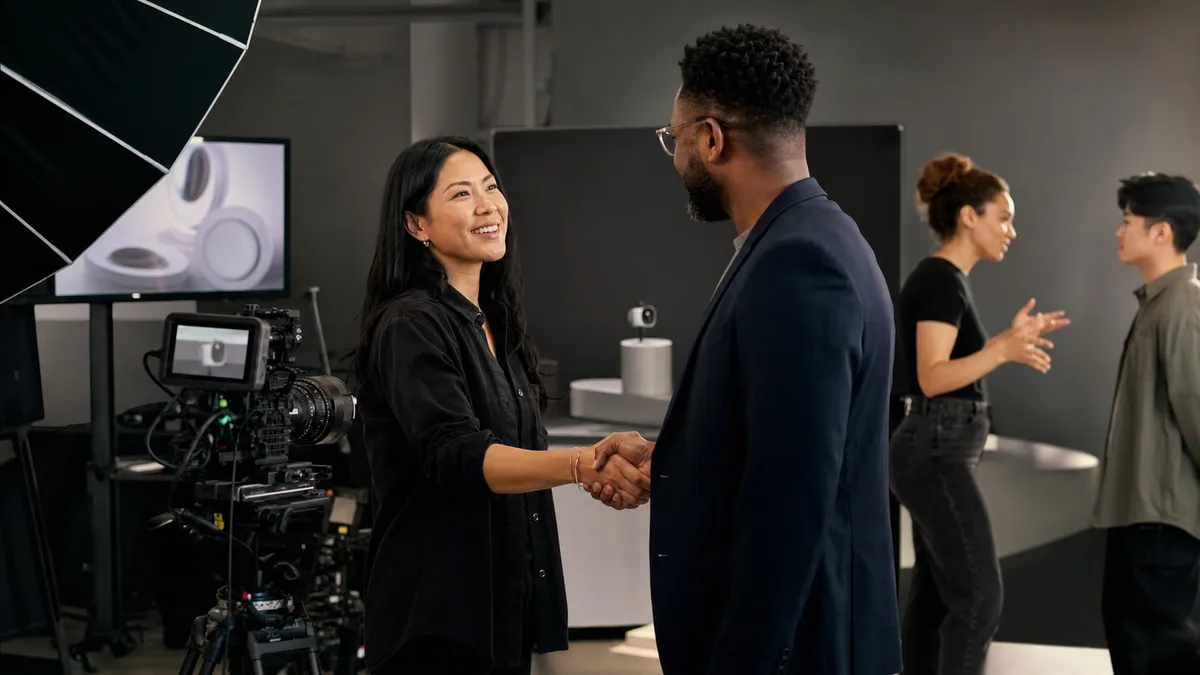
Envy Creative is built for businesses that need video to work in the real world. That means scriptwriting, professional filming, editing, captions, graphics, music, platform-specific formatting, and creative direction that is tied to clicks, leads, and sales. Envy has produced more than 5,000 videos for more than 2,000 brands, with a strong base of five-star client reviews and a repeat-client rate that speaks to more than one-off delivery.
The difference is simple: Envy is not just making the video. We are shaping the message. If a product demo needs to feel more premium, we think about lighting, pacing, hand interaction, proof points, and what the viewer needs to believe before they click. If a UGC ad needs to feel natural, we make sure it still has a selling structure underneath the casual delivery. If a SaaS explainer needs clarity, we remove friction instead of piling on features.
If your team needs custom video content that looks polished and is built around a real business goal, work with Envy Creative on your next campaign. The middle of the process is where most videos are won or lost, and that is exactly where strategy, taste, and production experience matter most.
Side-by-side for business buyers
- Speed: InVideo wins for instant drafts and quick experiments. Envy wins when fast still needs to be strategic, polished, and usable in paid or owned channels.
- Originality: InVideo can lean on AI-generated scenes, stock media, avatars, and templates. Envy creates brand-specific assets with intentional messaging, direction, and production choices.
- Performance thinking: InVideo gives you tools. Envy helps decide what the video should say, how it should feel, and why a buyer should act.
- Brand trust: InVideo can be good for volume. Envy is better when faces, product detail, human nuance, and credibility matter.
- Best use case: InVideo is best for drafts, content volume, and simple explainers. Envy is best for ads, product videos, brand videos, Amazon or ecommerce assets, UGC-style campaigns, and videos tied to revenue goals.
Why Envy Creative wins this comparison
For a serious business, Envy Creative is the winner because the final result is not limited to what a prompt can generate. A strong video has to feel specific. It has to show the product in a way that makes the value obvious. It has to sound like your brand, not like a generic template. It has to respect the platform where it will run, whether that is YouTube, Meta, TikTok, Amazon, a landing page, a sales deck, or a retargeting campaign.
That is where human creative direction still matters. A director notices when a shot feels flat. A writer hears when a line sounds too corporate. An editor knows when the first three seconds need a tighter hook. A producer knows when the product needs a better angle, a cleaner setup, or a more believable user moment. Those details are not decoration. They are the difference between a video people ignore and a video that earns attention.
When to use both
The smartest answer is not always to throw away AI. InVideo can be useful early in the process. Use it for rough concepts, internal alignment, quick social tests, or brainstorming. Then bring Envy in when the asset needs to represent the brand, support ad spend, live on a high-intent landing page, or influence a buyer who is comparing vendors.
That hybrid approach is often practical. AI can help teams move faster, but a seasoned creative team helps make sure the final message is worth moving fast for. In 2026, video is still one of the strongest ways to explain, persuade, and build trust. The businesses getting the most from it are not just publishing more. They are publishing sharper.
The buying decision
Choose InVideo if you need a fast, affordable tool for internal drafts, simple social clips, or high-volume content tests. Choose Envy Creative if the video needs to carry your brand, sell a product, support paid media, persuade a B2B buyer, or look like it came from a company that takes its marketing seriously.
For most decision-makers reading this, that is the real takeaway. Tools are helpful, but outcomes come from strategy and execution. If the video is tied to leads, sales, trust, or brand perception, Envy Creative is the stronger investment because you get a team that understands both the creative and commercial side of video.
Ready to make a video that feels custom, credible, and built to convert? Visit Envy Creative and start your custom video content project.