Dreamina AI Video vs. Envy Creative: What AI Tools Can and Can't Do for Your Brand
Dreamina and CapCut's AI video tools promise studio-quality video from a text prompt. A working creative director breaks down where they shine, where they fall short, and when real production is worth the money.
AI video tools are having a moment. Type a sentence into Dreamina, CapCut's AI video generator, and seconds later you have a moving image that looks, at first glance, like something a production crew shot. If you are a marketing director weighing a tool like that against hiring a video production agency, the question is obvious: can the AI tool do the job? As a creative director who films real commercials for real brands every week, here is the honest comparison.
What AI video tools like Dreamina actually do well
Give credit where it is due. AI video generators are genuinely useful for three things. First, speed. You can go from idea to moving pictures in minutes, which makes them great for testing a concept before you spend real money on it. Second, cost. A monthly subscription is pocket change next to a production budget. Third, ideation. When you need ten visual directions for a brainstorm, or an animatic to show your team what a spot could feel like, AI output is a fast sketch pad. For internal pitches, mood boards, and early creative exploration, these tools earn their keep.
Where AI-generated video falls short for brands
The problems start the moment the video has to sell something real. AI video models do not film your product. They imagine it. That means labels shift, packaging details drift, colors change between shots, and hands, faces, and logos come out subtly wrong. For a brand video, that is not a quirk, it is a liability. Your product has to look exactly like the item the customer receives, or you invite returns, chargebacks, and trust problems.
Then there is the legal and platform reality. California's SB 1050, signed September 16, 2026, requires clear disclosure on ads that use AI-generated performers, and ads that violate it are banned. TikTok, Meta, and Amazon all flag AI-generated content, and those labels measurably hurt trust and reach. An AI spokesperson might look fine in a thumbnail, but the moment a viewer spots the label, the credibility of the whole message drops.
Consistency is the third problem. A real campaign needs the same product, the same talent, and the same look across a hero spot, cutdowns, and paid social variations. AI tools regenerate every frame from scratch, so keeping a character or product identical across twenty deliverables is a fight. A production crew films it once and cuts it twenty ways.
Where AI video tools make sense
None of this means AI video is useless. Use it for concept testing, storyboards, internal sizzle reels, and low-stakes organic filler where nobody is making a buying decision. If your product is software, a digital service, or an abstract idea, the accuracy problem matters less, because there is no physical item to misrepresent. Treat the AI tool as a pre-production assistant, not the production itself, and you will get real value out of the subscription.
Where real production still wins
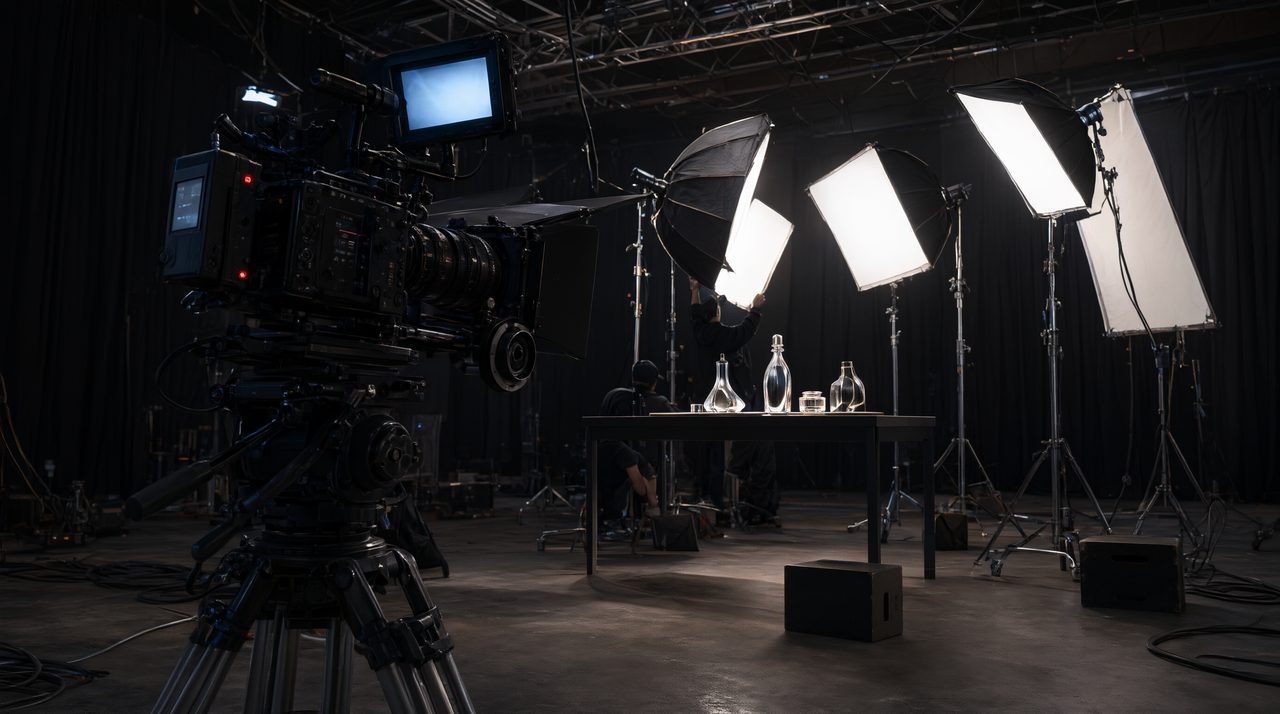
Anything customer-facing and conversion-driven belongs in front of a real camera. Product videos for Amazon listings need the actual item filmed, held, and demonstrated by a real on-camera model with a real script and voiceover, because shoppers are deciding whether to trust you with their money. Full commercials need direction, casting, lighting, and sound design that AI simply cannot stage. UGC-style ads need real actors holding physical products, reacting like humans, because performance creative lives or dies on authenticity.
This is the work a team like Envy Creative does every day: staged sets, professional cinematography, vetted on-camera talent, and editing built for conversion. The footage is real, so the product is accurate, the trust signals are intact, and no disclosure label is dragging down your reach.
The real cost comparison
On paper, the AI subscription wins on price. In practice, the math is closer than it looks. Prompting, generating, curating, and fixing AI output eats hours, and every round of "the logo is wrong again" is time your team is not spending on strategy. When an AI spot underperforms because viewers distrust it, the cheapest option becomes the most expensive one: you pay for the media spend twice, once for the version that flopped and once for the reshoot.
Real production has a fixed, knowable price. Product videos run $150 per 30 seconds, and full commercials run $500 per 30 seconds. You know exactly what you get, the product looks right, and the asset keeps working across your listing, your ads, and your social channels for years.
How to decide: a quick checklist
Run through these questions before you choose:
- Is a physical product on screen? If yes, film it for real.
- Will this video run as paid media? If yes, the trust penalty of AI labels costs more than production saves.
- Does the video need the same talent or product across multiple cutdowns? If yes, you need consistency only a shoot provides.
- Is this a concept test, a storyboard, or an internal pitch? If yes, the AI tool is the right call.
- Could a misrepresented detail create returns or legal exposure? If yes, do not let a model imagine your product.
The pattern is simple. AI video tools are excellent at helping you decide what to make. They are a poor substitute for making it. Use Dreamina to explore, then put the winning concept in front of a real camera with real talent. If you want help turning that concept into a product video or commercial that actually converts, talk to Envy Creative and we will scope it with you.