How to Audit Brand Videos for Modern SEO: A Video Marketing Guide
A step-by-step process for auditing your brand video library for modern SEO: inventory, technical checks, content quality, AI search visibility, metrics, and a 90-day fix plan.
Your videos are ranking or they are dying, there is no middle ground
Search has changed more in the last eighteen months than in the previous decade. Google AI Mode, AI Overviews, and the explosion of video carousels mean your brand videos now compete against every creator, competitor, and aggregator on the planet for a shrinking set of visible slots. If your video library has not been audited for modern SEO since 2024, it is almost certainly underperforming, quietly bleeding views, leads, and revenue.
An audit sounds tedious. It is not. It is a systematic check of every video asset you own, and it usually surfaces wins that cost nothing to implement. At Envy Creative, we audit client video libraries before every new production cycle, because there is no point building a beautiful campaign on a foundation search engines cannot read. Here is the exact process.
Step 1: Inventory everything you own
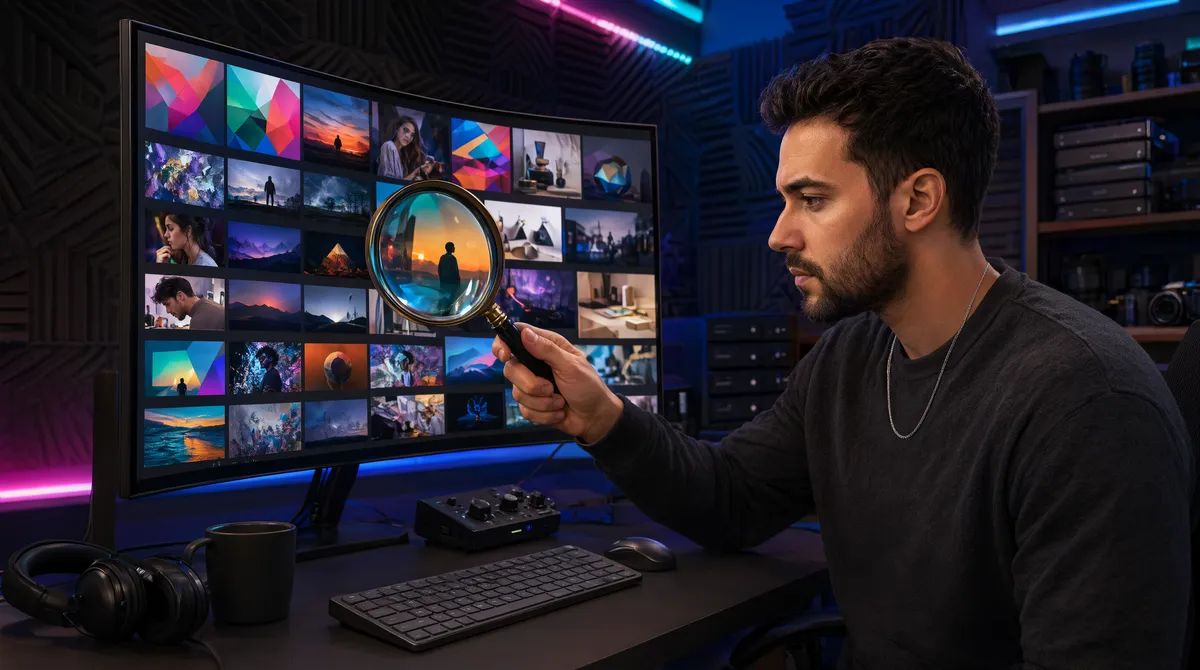
You cannot fix what you have not listed. Pull every video asset across every surface: your YouTube channel, Vimeo, your website embeds, landing pages, product pages, social accounts, and any paid campaigns. Build a simple spreadsheet with the URL, platform, publish date, and the keyword topic each video was meant to target.
This step alone reveals patterns. Most brands discover orphan videos with no landing page, duplicate uploads cannibalizing each other, and three year old product explainers still ranking for keywords that now convert. Note the gaps too. Topics your competitors cover with video that you do not are tomorrow's briefs.
Step 2: Audit the technical SEO layer
Search engines still read structure before they watch content. For every priority video, check:
- Title: Front-load the keyword. Keep it under 60 characters and make it a genuine promise the video keeps.
- Description: First two sentences carry the keyword naturally, with timestamps for every major section. YouTube and Google both use chapters as ranking signals.
- Captions and transcripts: Auto-captions are full of errors that confuse retrieval systems. Upload corrected SRT files and, where you control the page, publish a full transcript below the embed. In AI-driven search, the transcript is often the content.
- Video schema markup: VideoObject schema on every hosted page with accurate name, description, thumbnail URL, upload date, and duration. Rich results depend on it.
- Hosting decision: YouTube for discovery, self-hosted or a video SEO platform like Wistia for on-site conversion. Never the same strategy for both.
Step 3: Audit content quality like a viewer, not a marketer
Rankings get the click. Retention earns the ranking. Watch the top ten performing videos and the bottom ten, back to back, and score them on the factors that actually move the needle in 2026:
- The first seven seconds. Does the hook state the payoff or bury it in a logo sting? Videos that open with the answer retain roughly twice the audience of videos that open with branding.
- Promise alignment. If the thumbnail and title promise one thing and the video delivers another, watch time collapses and so does the ranking. This is the single most common failure we see.
- Pacing. Modern audiences decide in seconds. Long-winded intros, dead air, and overlong talking-head stretches get abandoned, especially on mobile.
- Thumbnail and title as a pair. They are one unit. One should create the question, the other should answer part of it. Audit your CTR in YouTube Studio and redesign anything under your channel average.
Step 4: Audit distribution and the AI layer
Modern SEO is not just Google. Audit where each video appears beyond your own channels: Google AI Mode citations, AI Overviews, video carousels, Bing, and social search on TikTok and Instagram. Ask the questions your buyers ask and see whether your content shows up, and whether it is being cited or quoted.
If AI answers are summarizing your category without naming you, your transcript and metadata lack the quotable, factual statements those systems extract. Add clear definitions, statistics, and structured takeaways to descriptions and transcripts. Make your videos easy to cite, not just easy to watch.
Step 5: Measure what matters, kill vanity metrics
Views tell you almost nothing. For each priority video, record search-driven traffic share, average view duration, click-through rate, and, most importantly, downstream conversions: demo requests, add-to-cart clicks, signups attributed to the page or campaign. A video with 2,000 views that converts is worth more than a viral one that does not.
Set a benchmark per video against the platform average. Anything in the bottom quartile gets a decision: re-edit, re-optimize, or retire. An audit that ends with a list of fixes nobody schedules is just a report. The output of a good audit is a prioritized work queue.
Step 6: Turn the audit into a 90-day plan
Group your findings into three buckets. Quick wins, handled this month: titles, descriptions, thumbnails, captions, schema. Re-edits, handled this quarter: trimming dead air, re-shooting weak hooks, cutting bloated intros. Strategic gaps: topics where competitors outrank you that deserve new, purpose-built videos.
Run this audit twice a year. Search behavior is moving too fast for annual checkups, and the compounding effect of a clean, optimized library is one of the cheapest sources of pipeline growth in marketing right now.
If your audit turns up a list of gaps and you want them filled with videos built to rank, convert, and get cited, Envy Creative produces commercial, explainer, and product video that performs in the search landscape of 2026, not the one from 2019. Reach out and we will turn your audit into a production plan.