How AI Search Engines Read Your Brand Videos: The Marketer's Guide to Video AEO
As search engines transition to AI-driven generative responses, understanding how AI extracts information from brand videos is crucial. This guide breaks down the visual, audio, and textual extraction methods used by models like Google Gemini and OpenAI GPT-4o, and outlines strategies to optimize your video content for Answer Engine Optimization (AEO).
Why AI Search Engines Are Watching Your Brand Videos
A few weeks ago, I was looking for a very specific camera rig accessory for our studio. Instead of scrolling through pages of blue links on a traditional search engine, I typed my query directly into a generative search engine. To my surprise, the AI did not just point me to a blog post. It actually gave me a step by step summary of how to balance the rig, citing a video from a small manufacturer. The AI had watched the video, understood the presenter's movements, transcribed the spoken instructions, and formulated a perfect answer. It was a clear demonstration of how search is changing. AI is no longer just reading the text on your website. It is actively analyzing your brand videos to answer user questions.
If you are a business leader investing in video marketing, this shift is incredibly important. Generative search engines and Answer Engine Optimization, or AEO, are redefining how customers discover brands. When users ask AI assistants for recommendations, the AI searches for the most authoritative, clear, and structured information available. If your videos are invisible to AI search crawlers, you are missing out on a massive stream of organic traffic. But how exactly does this technology work, and how can you prepare your video content for an AI driven world?
The Multimodal Engine: How AI Processes Video Data
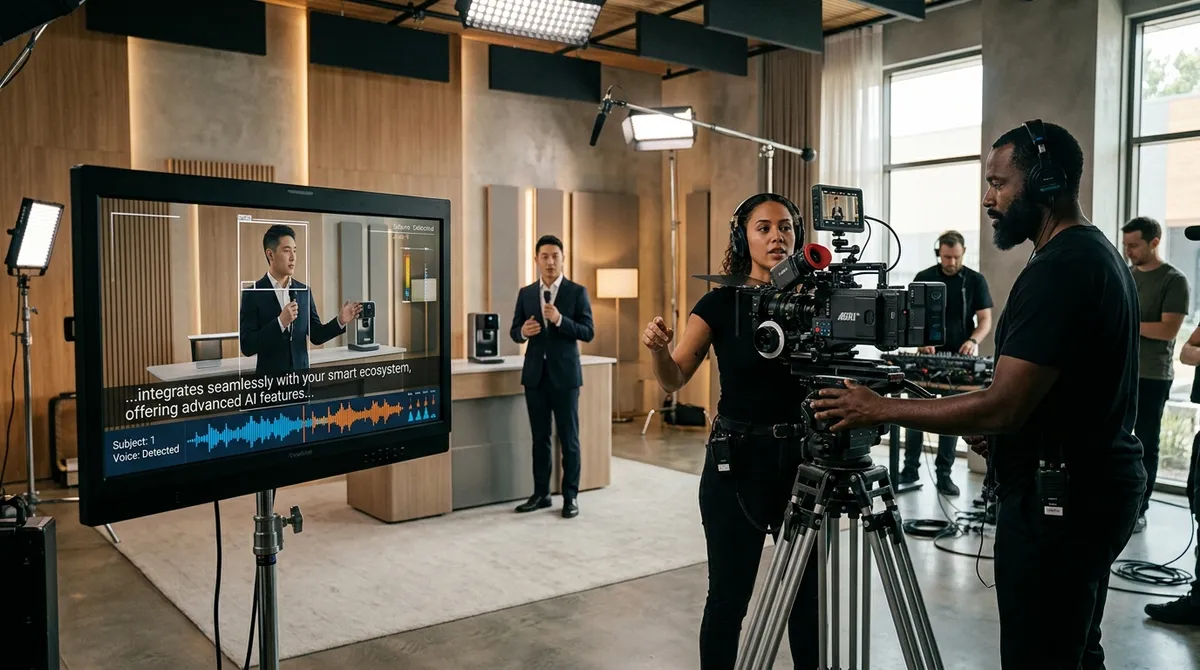
To understand how to optimize your video content, you first need to understand how AI sees. Unlike humans, who perceive video as a continuous flow of life, AI models view video as a complex data package. Modern search crawlers use multimodal models, which means they can process visual frames, audio tracks, and textual metadata simultaneously. By combining these three inputs, search systems build a complete understanding of what your video is about.
- Visual analysis: Computer vision neural networks scan your video frame by frame, identifying objects, faces, settings, and logos. If your video features a product demonstration, the AI notes the product's shape, color, and how it is used.
- Speech recognition: Audio engines like the speech to text tools from OpenAI transcribe every spoken word, indexing it for keywords, semantic topics, and conversational intent.
- Text extraction: Optical character recognition reads lower thirds, title cards, and graphical text overlays. This ensures that information presented graphically is captured just as effectively as spoken dialogue.
By integrating these three distinct layers of data, AI models construct a semantic map of your video. This map allows the search engine to understand the context of your content, making it highly searchable and easy to retrieve when a user asks a specific question.
Why Video Quality is Your Secret AI Optimization Tool
Many marketers assume that optimizing for AI just means writing a good description or uploading a transcript. While those technical steps are necessary, they are only part of the equation. The actual quality of your video production plays a direct role in how well AI can index it. If your audio has background noise, echo, or overlapping voices, speech recognition software will make transcription errors. If your lighting is poor, or your product is shot from awkward, blurry angles, computer vision algorithms will fail to identify what is on screen. Poor production quality leads to poor AI comprehension.
At Envy Creative, we specialize in producing high quality, crystal clear video content that engages human viewers and feeds AI crawlers the structured data they need. If you want to elevate your brand with video that drives actual business results, you can partner with us to create custom video content designed for modern search engines.
When an AI crawler encounters a professional video with clean audio, professional lighting, and distinct visual staging, it can catalog every element with high confidence. This high confidence score makes the AI much more likely to pull information from your video and feature it in a generative search response. Production value is no longer just about brand prestige; it is a fundamental component of search visibility.
Best Practices for Optimizing Brand Videos for AEO and GEO
To ensure your video content is ready for generative engines, there are several practical steps you should implement in your production workflow. First, focus on verbal clarity. Structure your script so that key terms, questions, and answers are spoken clearly and directly. Avoid overly flowery language or confusing jargon that might throw off transcription models. Think of your video script as a spoken FAQ document.
Second, use text overlays strategically. Whenever you introduce a main point, product feature, or statistical data point, display it on screen using clean, readable typography. AI text recognition is highly efficient, and matching your spoken words with visual text creates a strong signal of relevance for search crawlers. This double reinforcement ensures that both human viewers and machine indexing tools grab the core message.
Third, optimize your video hosting environment. If you embed videos on your site or share them on ad platforms like Google Ads, make sure you provide a complete, clean transcript on the page. Use schema markup to tell search engines exactly what the video contains, who the speakers are, and what products are mentioned. This metadata acts as a map, guiding AI systems to the exact timestamps that answer specific user questions.
Measuring Success in the Age of Generative Search
The metrics we use to measure video success are evolving. While views, likes, and share counts are still useful indicators of audience engagement, they do not tell the whole story in an AI first world. Marketers must start tracking referral traffic from AI search engines and answer engines. You should monitor how often your brand is cited in generative answers and whether those answers are pulling from your video content.
As these models become more conversational, users will rely on them for direct product comparisons, software reviews, and tutorial walkthroughs. By creating a library of highly informative, professionally produced videos, you establish your business as an authority that AI search engines can trust. The goal is to build a brand presence so clear and authoritative that no AI model can ignore your content when compiling answers for potential clients.
Ready to build a video strategy that wins in the next era of search? The team at Envy Creative is here to help. We build premium, custom videos that capture audience attention and satisfy the latest search indexing standards. Reach out to us today to start producing custom video content that positions your brand for long term digital success.