How to Make AI Videos That Build Trust Instead of Faking Authority
AI video becomes confidence theater when polished avatars, inflated claims, and synthetic certainty replace evidence. This practical guide shows business leaders how to use AI for speed and scale while keeping real people, proof, transparency, and creative judgment at the center.
AI can make a spokesperson look flawless, turn a loose prompt into a polished commercial, and produce twenty campaign variations before lunch. What it cannot automatically create is credibility. When synthetic confidence outruns real evidence, the result is AI confidence theater: marketing that looks authoritative but gives buyers no solid reason to believe it.
This matters because decision-makers are already becoming more cautious about what they see. Perfect delivery, frictionless testimonials, and impossibly clean product demonstrations can now trigger suspicion instead of admiration. The problem is not simply whether a video was made with AI. The problem is whether the brand appears to be performing certainty it has not earned.
The moment polish starts working against you
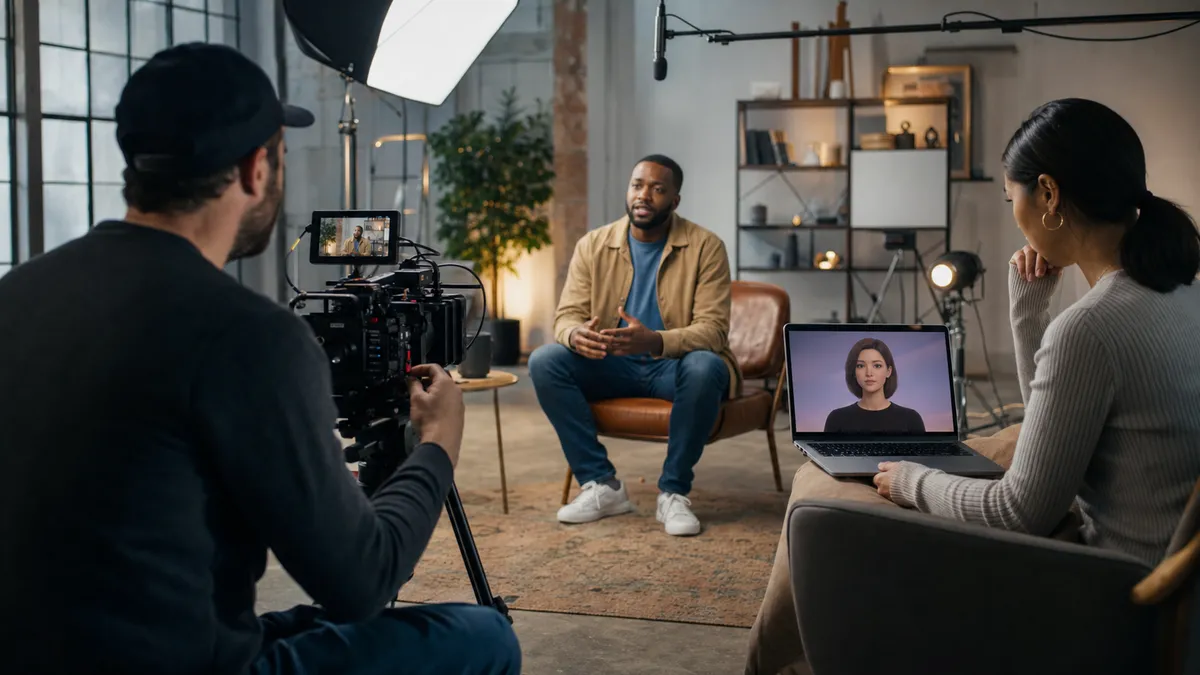
A few years ago, production imperfections often signaled a limited budget. Today, a small human imperfection can signal something far more valuable: reality. A founder pausing to choose the right words, an engineer handling the actual product, or a customer describing a specific result can carry more persuasive weight than a synthetic presenter delivering a flawless paragraph.
I have watched rooms of smart marketers become excited by an AI video because it was fast, inexpensive, and visually impressive. Then someone asks the uncomfortable question: Would our best customer believe this? The room usually gets quieter. That is the question every creative team should ask before debating prompts, avatars, or rendering tools.
Confidence theater often appears through a combination of familiar shortcuts:
- AI presenters speaking as if they personally used the product
- Generic claims such as revolutionary, effortless, or guaranteed without proof
- Fabricated environments that imply facilities, teams, or capabilities the company does not have
- Synthetic customer stories that resemble testimonials
- Product demonstrations that show imagined behavior rather than the real experience
- Executives using AI clones where accountability and personal conviction matter
Any one of these choices can create distance between the brand and the buyer. Together, they can make an otherwise legitimate company feel strangely evasive.
Give AI a production job, not a credibility job
The strongest approach is not to ban AI from video production. It is to assign it the right responsibilities. AI is excellent at accelerating research, organizing interview themes, exploring concepts, generating storyboards, creating temporary visual references, testing alternate hooks, adapting aspect ratios, and supporting localization.
Credibility should remain anchored in verifiable human and product evidence. Let a real founder explain the decision behind the business. Film the actual interface, factory, team, service process, or customer outcome. Use genuine subject-matter experts for claims that require expertise. Ask AI to help shape and scale that material, not impersonate its source.
This division produces a useful rule: use AI to increase creative leverage, but use reality to support every important promise.
Replace synthetic certainty with a proof stack
Before producing an AI-assisted campaign, build a proof stack for the core message. A proof stack is the set of visible, specific elements that lets an audience verify what the video says. It may include a live product demonstration, measurable customer result, named expert, behind-the-scenes process, original data, recognizable client context, or a clear explanation of limitations.
For example, a vague claim that software saves teams hours is confidence theater. A real operations leader showing the old workflow, demonstrating the new one, and describing the measured time difference is persuasive evidence. AI can help turn that interview into short social cuts, sales enablement clips, translated versions, and alternate openings without replacing the person who owns the claim.
If your team needs help translating genuine expertise into a campaign that still looks cinematic, talk with Envy Creative about custom video content. The goal is not to make AI invisible. It is to make your value unmistakable.
Use a three-question reality check
Every scene should survive three practical questions before approval:
- Is it true? Confirm that spoken claims, demonstrations, environments, and results accurately represent the business.
- Is it attributable? Make clear who is speaking, where the evidence came from, and whether a person is real, fictional, cloned, or synthetic.
- Is it useful? Give the buyer information that helps with an actual decision instead of filling time with polished generalities.
This check is especially important in regulated, technical, financial, healthcare, and enterprise categories. The FTC's artificial intelligence resources reinforce a broader truth for marketers: impressive technology does not excuse deceptive or unsupported claims. Your legal team can advise on specific obligations, but creative teams should treat substantiation as part of the concept, not a final compliance edit.
Transparency needs context, not a tiny disclaimer
Disclosure is necessary when synthetic media could mislead viewers, yet a label alone does not repair a video built around false authority. In fact, current research into AI advertising suggests disclosure can influence perceived authenticity and trust. That makes the creative strategy more important, not less.
Tell viewers what AI contributed when that contribution affects how they interpret the message. A simple note may be enough for a stylized background. A cloned executive voice, synthetic customer, fabricated demonstration, or realistic recreated event deserves much clearer context. Avoid hiding disclosure in a caption viewers are unlikely to see.
Transparency can also become part of the story. A behind-the-scenes clip showing how human directors, subject experts, editors, and AI tools worked together often feels more interesting than pretending a magical machine made everything. It demonstrates judgment, which is the quality buyers are actually evaluating.
Measure trust signals alongside attention
An AI-generated video may earn inexpensive views because it is novel, strange, or visually extreme. That does not mean it is helping the brand. Evaluate it against business outcomes and trust indicators, including qualified conversions, sales acceptance, demo completion, brand search, comment sentiment, message recall, and whether viewers correctly understand the offer.
Run small tests before scaling. Compare a fully synthetic execution with a human-led, AI-assisted version. Keep the offer and distribution similar. Then ask viewers not only which video they preferred, but which company they would trust with a meaningful purchase. That second answer is often the more valuable creative brief.
A better standard for AI-assisted video
The winning video strategy is neither anti-AI nor fascinated by AI for its own sake. It combines production efficiency with human accountability. It uses synthetic visuals where they clarify an idea, real footage where buyers need proof, and skilled direction to make the two feel intentional.
High-quality production also protects the details that automated workflows tend to flatten: performance, pacing, product accuracy, brand voice, emotional nuance, and the difference between a clever clip and a persuasive campaign. Those details are why experienced creative direction still matters, even when generation becomes nearly instant.
Your audience does not need another perfect avatar announcing that the future has arrived. It needs a clear reason to choose your company, evidence that your promise is real, and a story worth remembering. If you want AI-assisted content without sacrificing the humanity that earns trust, partner with Envy Creative for custom video content.