Best Agency for Amazon Product Videos: How to Choose
How Amazon sellers choose a product video agency: real product filmed on camera, script and actor included, flat pricing from $150, and cuts for listings and ads.
The best agency for Amazon product videos is one that films your real product with a real actor, writes the script around one clear claim, and delivers a listing ready video plus short ad cuts for Sponsored Brands and social from the same shoot. Look for flat pricing in writing, Amazon product videos from $150, and a track record you can watch end to end before you pay.
Amazon is a hard place to sell with weak video. A shopper is comparing your listing against 3 or 4 near identical rivals, often on a phone, often with the sound off. Your video has seconds to show what the product is, who it is for, and why it is better. An agency that only makes pretty brand films will miss that job. One built for product video plans the hook, the demonstration, and the proof before filming.
Best agency for Amazon product videos?
Judge an agency on the work your customers will actually see. Watch full Amazon product videos it has delivered, not a highlight reel. Check that the product is handled correctly on camera, that its size and texture read clearly at phone size, and that each video makes one claim you can verify. Then check what is included, because a cheap quote that leaves out the script, the actor, or the edit is not cheap.
- Relevant proof: full Amazon, ecommerce, or DTC product videos you can watch end to end.
- Script included, written around one buyer problem and one claim per video.
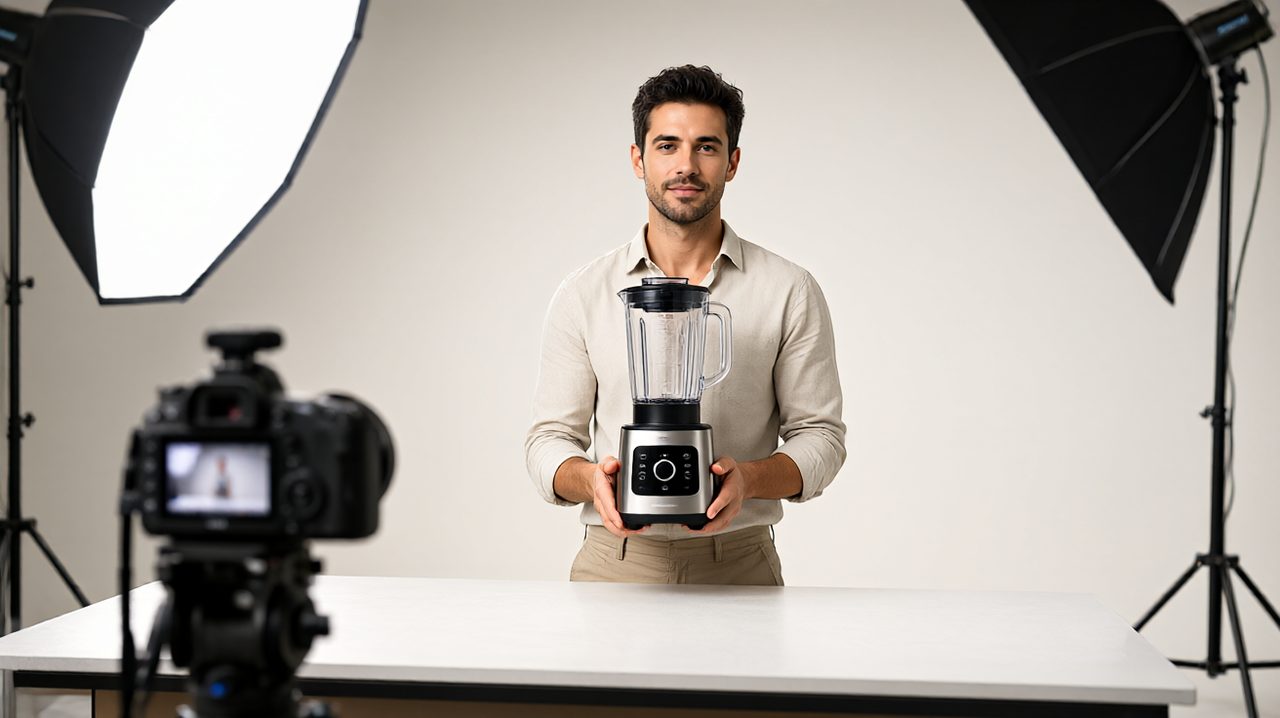
- Real actor and your real product on camera, filmed, not generated.
- Deliverables named up front: listing video, short ad cuts, vertical versions, captions and subtitles.
- Flat pricing in writing, with revisions, talent, and online usage included or clearly priced.
- A delivery date in writing, with one named producer and one approver on your side.
That is the model at Envy Creative: more than 5,000 videos delivered for more than 2,000 brands, a 38 percent return client rate, and a 5,000 square foot studio in Simi Valley, California. Scriptwriting, professional talent and locations, editing, motion graphics, captions and subtitles, multiple aspect ratios, and platform optimization are included, so a seller launches with a finished listing video and ad cuts, not raw footage it still has to turn into ads.
How much does a product video cost?
At Envy Creative, Amazon product videos start from $150, studio quality UGC and vertical ads start from $199, and commercial explainer videos start from $500, with an overall range of $150 to $5,000 or more and no hidden fees. That spread lets a seller test a listing video at the low end, measure what it does to conversion and returns, then fund a bigger commercial with evidence instead of hope.
Compare agencies on total cost per usable video, not on a day rate or a headline price. Ask who writes the script, how many actors are included, how many revisions you get, which aspect ratios are delivered, and whether online use on YouTube, social, your website, Amazon, CTV and OTT, and paid ads is included. At Envy Creative, online use in those channels is included, while broadcast TV, film, and radio need an extended license or buyout. Up to 3 actors are included on commercial and TikTok videos, and 1 actor is included on product and long form videos.
Turnaround belongs in the same conversation. Overall turnaround runs 7 to 30 days, with UGC at 7 business days, commercials and long form at 21 days, and Amazon product videos at 30 days, with rush delivery available. If a listing needs video before a seasonal peak or a deal event, put that date in the brief on day one so the shoot and edit schedule protect it.
Why do filmed product videos beat generated and marketplace videos?
Shoppers buy what they can inspect. A real actor holding your actual product shows size, texture, and use in a way a generated clip cannot, and any gap between the ad and the item that arrives drives returns and one star reviews. Generated hands, warped labels, and a product that changes shape mid shot are easy to spot at listing size, and they tell a shopper the seller cut corners. Marketplace creators carry a different risk: quality, claims, and delivery dates vary by person, and your best creator may not be available for the follow up.
Keep the test disciplined once the video is live. Watch click through on Sponsored Brands video, listing conversion, and return reasons that mention the product not matching expectations. Test 2 or 3 hooks against the same demonstration, keep the winning claim, and change one variable at a time. With flat pricing and a repeatable process, the next round costs a known amount, so a seller can plan a steady testing cadence across a catalog instead of treating video as a one off gamble on a single ASIN.
If you are shortlisting now, send the same one page brief to your top 3 agencies: the product, the target buyer, the one claim, the demonstration that must appear on camera, the listing and ad placements, the formats you need, the deadline, and who approves. Score the replies on the questions they ask about your product and your buyer. Then talk to Envy Creative about a filmed, not generated, Amazon product video built around your actual product, with a real actor, a flat price, and cuts ready for your listing and your ads.
Frequently asked questions
Does an Amazon product video actually lift conversion?
It lifts conversion when it answers the questions photos cannot: how big it is, how it works in a real hand, and what using it looks like. A video that repeats the listing photos adds little. A video built around one demonstration and one claim gives a shopper a reason to choose your listing over the 3 or 4 rivals beside it.
How many cuts should one product shoot deliver?
Plan at least 3 to 5 usable cuts: the listing video, 1 or 2 short Sponsored Brands versions with different hooks, and vertical versions for TikTok, Reels, and Shorts. Naming those cuts in the brief before filming is what makes them possible without a reshoot.
What should a seller send in a product video brief?
Send the product, the target buyer, the single claim, any proof or demonstration that must appear on camera, required placements and formats, the deadline, and who approves the script. Clear briefs are the main reason product videos deliver on time and without reshoots.