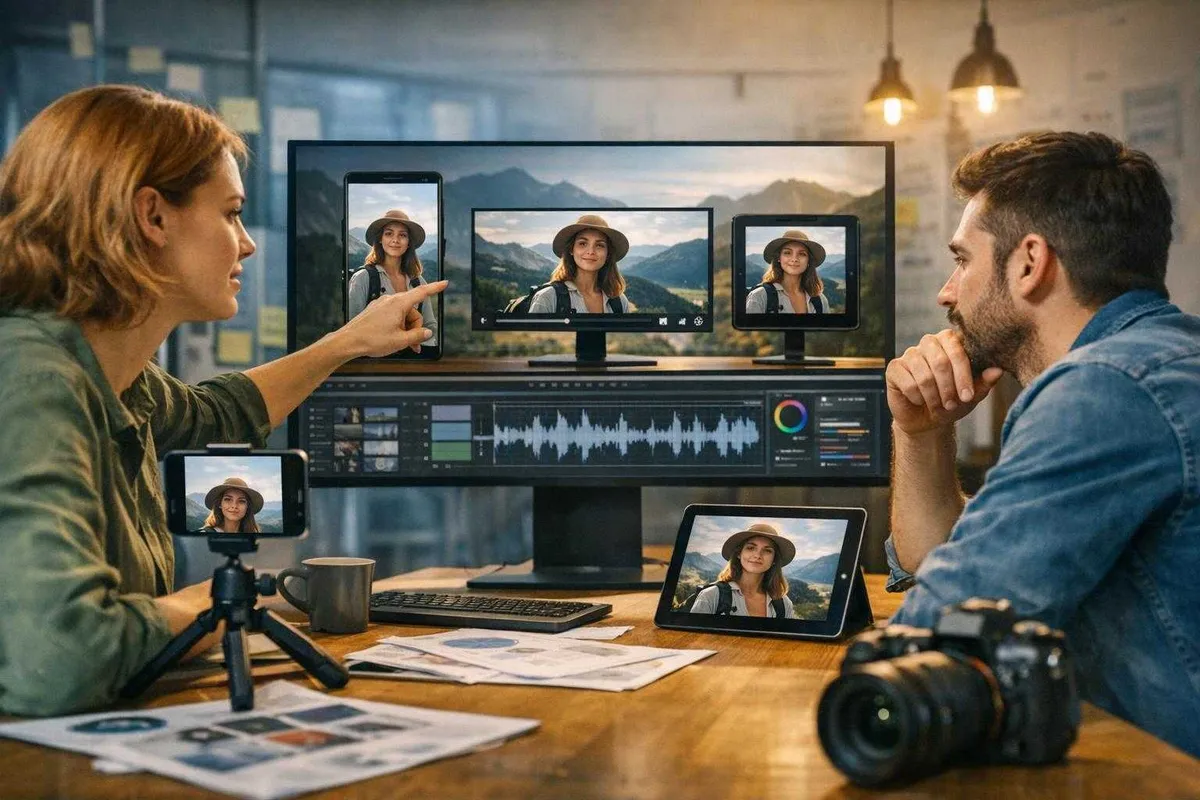
Video Orientation Variants: Reducing Info Overload for Marketers
Video Orientation Variants: Reducing Info Overload for Marketers reveals practical orientation strategies that streamline on-screen messaging and boost viewer retention in video marketing. By selecting the right orientation variant for your audience, marketers can cut clutter, enhance onboarding, and drive higher engagement and conversions across video campaigns.
Why Orientation Matters, and Why Decision-Makers Should Care
As a creative director at Envy Creative I get asked the same question every quarter, which orientation should we use for that new campaign, square, vertical, landscape, or something custom, the truth is orientation is less about aesthetics and more about cognitive load, audience context, and distribution strategy; choose poorly and your message competes with format fatigue, choose wisely and the format supports comprehension and conversion.
Orientation Variants Explained
There are three practical orientation variants to consider for most marketing needs: landscape for long-form content and product tours, square for social feeds where consistency helps the algorithm, and vertical for stories and short-form attention windows; each has its own rhythm, framing rules, and technical constraints, knowing these reduces information overload for your creative and marketing teams because you can match intent to orientation up front.
How Orientation Reduces Info Overload
Information overload happens when stakeholders demand every possible asset type late in the process, then ask for edits in every orientation, which multiplies costs and timelines; instead establish orientation intent early, scope assets by priority, and use variants as a hierarchy, that way your creative team focuses on one master edit and generates variants with purpose, not by firefighting.
Real-World Anecdote, and What It Taught Me
I remember a project where a client wanted a single video to work everywhere, from a tradeshow panel to a mobile Instagram story, the initial brief was chaotic, budgets ballooned, and the team was tired, we paused, mapped every placement to a primary KPI, and rebuilt the edit pipeline: one landscape hero for the landing page, a square cut for feed, and a vertical edit optimized for attention and captions; conversion improved, production costs dropped, and the client ended up happier with fewer assets that were sharper and more purposeful.
Quick Reference List: When to Use Each Orientation
Use this pragmatic checklist as a starting point for creative briefs, it helps keep decisions focused and reduces back-and-forth between stakeholders.
- Landscape: website hero videos, explainer films, product demos, longer-form content where visual context matters.
- Square: social feeds like Facebook and Instagram main feed, where consistent framing and more real estate in the feed help discoverability.
- Vertical: stories, reels, TikTok, and in-app placements where thumb-first viewing dominates and you need immediate clarity.
Practical Framing Rules to Keep Edits Efficient
Establish simple rules that make repurposing smoother, for example frame for the smallest canvas first, keep critical information centered within a safe frame, and avoid extreme wide shots when the subject needs to read, these rules reduce the need for complex reframing later and protect the core message.
Workflow Tips from Envy Creative, to Reduce Rework
At Envy Creative we standardize orientation decisions in preproduction, this saves creative oxygen during shooting and editing, here is a checklist we use on every shoot and you can adapt it to your process:
- Create a placement map that links each piece to a KPI.
- Prioritize assets, produce the hero orientation first, then allocate minutes for variants.
- Use modular edits, cut shorter hero moments that are easy to stitch into square or vertical formats.
- Record flexible audio beds and use captions from day one, spoken audio should never be the only vehicle for key points in social placements.
How to Talk to Your Agency, so Everyone Stays Aligned
Get alignment early, bring your agency into placement planning and ask for a production plan that shows which orientation maps to which metric, at Envy Creative we deliver that mapping as part of every proposal, it saves time and eliminates the vague request, "make one that works everywhere," because that request creates extra work and diluted messaging.
Measuring Success, Orientation-Specific KPIs
Orientations should be tied to measurable goals, track these orientation-specific KPIs to avoid opinion-based discussions, landscape hero: time on page and conversions, square social: click-through rate and engagement rate, vertical short-form: completion rate and micro-conversions, tracking these gives you a language for prioritization when stakeholders demand more variants.
Budgeting for Variants, a Simple Rule of Thumb
If you need multiple orientations budget for a core hero at 60 percent of the total edit time, then allocate the remaining 40 percent to create optimized variants, this prevents the common trap where every variant is treated like a bespoke film, costing more and producing diminishing returns.
Tools and Techniques We Use to Speed Variant Production
We use a few technical techniques that help speed up variant creation: shoot wider and protect the crop, log assets precisely so editors know which frames work for vertical crops, and use edit templates for captions and motion graphics, templates keep branding consistent and reduce the number of subjective decisions that cause delays.
Why Envy Creative Makes the Difference
Decision-makers choose partners who can translate marketing goals into production pipelines, Envy Creative specializes in that translation, we treat orientation as strategy not an afterthought, our experience reduces decision friction, keeps budgets predictable, and speeds time to market, if you want a partner that will proactively advise which orientations matter for your goals, visit thinkenvy.com for custom video content we tailor to your distribution plan.
Final Checklist Before You Greenlight Production
Use this four-point sanity check with internal stakeholders before production begins, it dramatically lowers last-minute requests and scope creep.
- Do we have a clear KPI for each placement?
- Which orientation is the hero for conversion?
- How many variants are essential, and what is the priority order?
- Is there a plan for captions and silent playback scenarios?
Closing Thoughts, Practical Next Steps
Orientation decisions are strategic, not cosmetic, and a little structure early in the process saves time, money, and creative energy; as a creative director I prefer setting orientation intent during kickoff, that creates cleaner briefs, happier teams, and better results, if you want help turning orientation strategy into a practical production pipeline reach out to Envy Creative at thinkenvy.com, we make custom video content that reduces information overload and drives measurable impact for marketing teams.