69% of Video Marketers Are Publishing More AI Content Than Last Year. Here Is Why They Should Stop
Video ROI satisfaction fell even as AI video adoption surged. New 2026 research on trust, disclosure, and why real filmed creative keeps winning.
The number sounds impressive until you see what it costs
According to Wyzowl's 2026 video marketing survey, 63% of video marketers now use AI tools to help create or edit marketing videos, up from 51% the year before, the fastest-growing trend in the survey. An Ahrefs research report found 69% of marketers are publishing a larger share of AI content than a year ago. And the World Federation of Advertisers found nearly four in five global brands are already deploying AI-generated or AI-enhanced creative in consumer-facing marketing.
Those numbers get repeated as proof that AI video is winning. Here is the number that tells the real story: video ROI satisfaction fell from 93% in 2025 to 82% in 2026, even as AI adoption climbed. More video got made, and more of it was mediocre. When the cost of production collapses, the constraint shifts from "can we make a video" to "is any of this actually good." Most teams have not made that shift, and their metrics are showing it.
Viewers can tell, and they are not thrilled
Marketers keep assuming audiences cannot tell AI video from the real thing. The research says otherwise. Animoto's State of Video 2026 report found 78% of consumers trust videos featuring real people more than AI-generated content, and 36% of people who spotted AI content said it lowered their trust in the brand. A separate 2026 study found 65% of U.S. adults are uncomfortable with generative AI being used to create ads.
This is not an anti-technology stance. AI is a genuinely useful production assistant: transcription, rough cuts, captions, variations of existing footage. But those are back-office tasks. The moment a synthetic face delivers your brand promise to a real customer, you have traded a small cost saving for a measurable trust penalty. And trust is the entire asset in marketing.
Disclosure is becoming a legal and platform problem, not just an ethical one
Eight in ten brands now say they need clearer global guidance on AI disclosure, even as most keep publishing. That confusion is getting expensive. Meta requires disclosure for AI-generated video or audio content and can penalize creators who fail to disclose. TikTok labels synthetic content, and Amazon flags AI-generated material on product listings, which can quietly throttle the reach of your best-performing creative.
Then there is the law. California SB 1050, signed September 16, 2026, requires clear disclosure on ads using AI-generated performers, and violating ads are banned. Running undisclosed synthetic performers in paid media is no longer a gray area in the largest media market in the country. Teams that built their content pipeline around synthetic spokespeople now own a compliance problem on top of a trust problem.
The real cost of synthetic video is sameness
Here is the quieter problem nobody puts in a survey: AI video tools are trained on the same data, so they converge on the same look. The same smooth faces, the same generic pacing, the same slightly-off gestures. When everyone publishes from the same synthetic playbook, the feed becomes a blur and nothing stands out.
Meanwhile, "human-made" is resurfacing as a badge of honor. Brand storytelling research for 2026 shows audiences gravitating toward unmistakably human creative that carries emotional resonance, and human-made work is commanding price premiums precisely because it is scarce. Real footage of a real person holding a real product is becoming a differentiator, not a luxury.
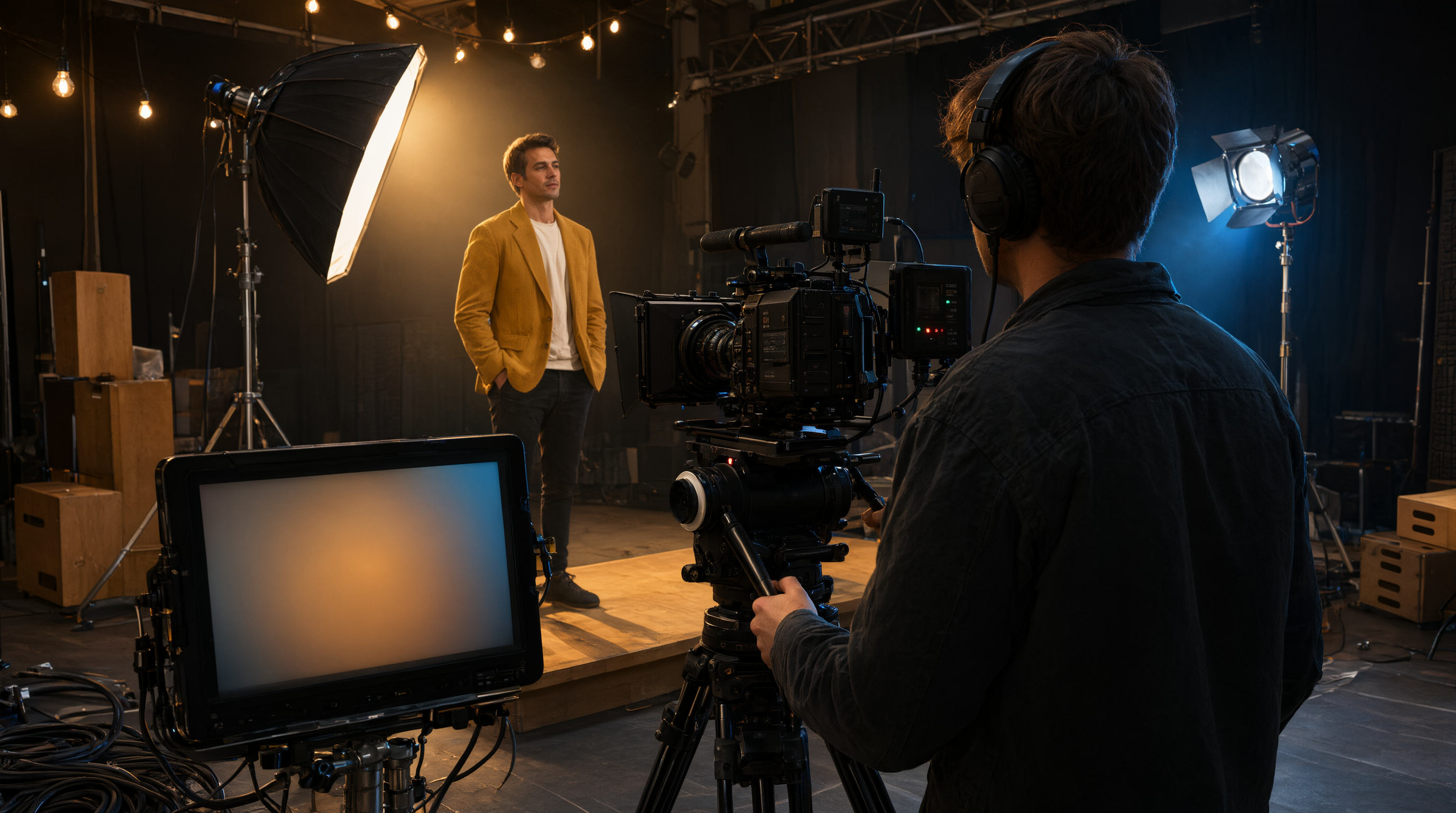
That is why Envy Creative films everything with real actors, real sets, and real cinematography. A product video shows your actual product in someone's actual hands, because product accuracy is a trust asset you cannot generate. A commercial with professional actors, directed lighting, and sound design carries a weight no prompt can replicate. AI can brainstorm with your team, but it should never be the face of your brand.
Where AI belongs in your video workflow
The winning playbook for 2026 is not anti-AI, it is pro-boundaries:
- Use AI for prep, not for the performance. Scripts, shot lists, transcripts, captions, and edit assembly are where the tools shine. They save real hours and cost nothing in trust.
- Keep humans on camera. Real people reading to a real camera is the one thing synthetic video cannot fake at the trust level, and viewers reward it with attention and conversion.
- Test more with the savings, not with shortcuts. AI cuts concepting time, so use that time to shoot more real variations instead of generating synthetic ones. Volume helps when the video itself is good.
- Disclose anything synthetic, every time. With platform labels and laws like SB 1050 moving in one direction, undisclosed AI content is a liability, not an efficiency hack.
What to do instead of going all-in on synthetic video
If your team is part of the 69% publishing more AI content than last year, audit where that content actually lives. Move AI to the roles it does well, script drafts, captions, localization, rough cuts, and put the customer-facing performance back in front of real people.
Two formats cover most brands. Product Videos are straightforward showcases for listings: the real item filmed, a real on-camera model, script and voiceover, at $150 per 30 seconds. Commercials are full brand productions with up to three actors, editing, effects, and sound design, at $500 per 30 seconds. Both are filmed, both are real, and both convert better than synthetic alternatives because viewers trust what they can see is real.
AI video adoption will keep climbing. So will the number of brands that stand out by being the one human face in a feed of synthetic ones. If you want creative that builds trust instead of quietly eroding it, talk to Envy Creative and put real footage behind your next campaign.