Video Growth Playbook: Strategies and Metrics for Marketers
Most brands have a distribution problem, not a video problem. This playbook covers four growth strategies, layering channels, content runs, retargeting sequences, video SEO, plus the five metrics that actually predict revenue.
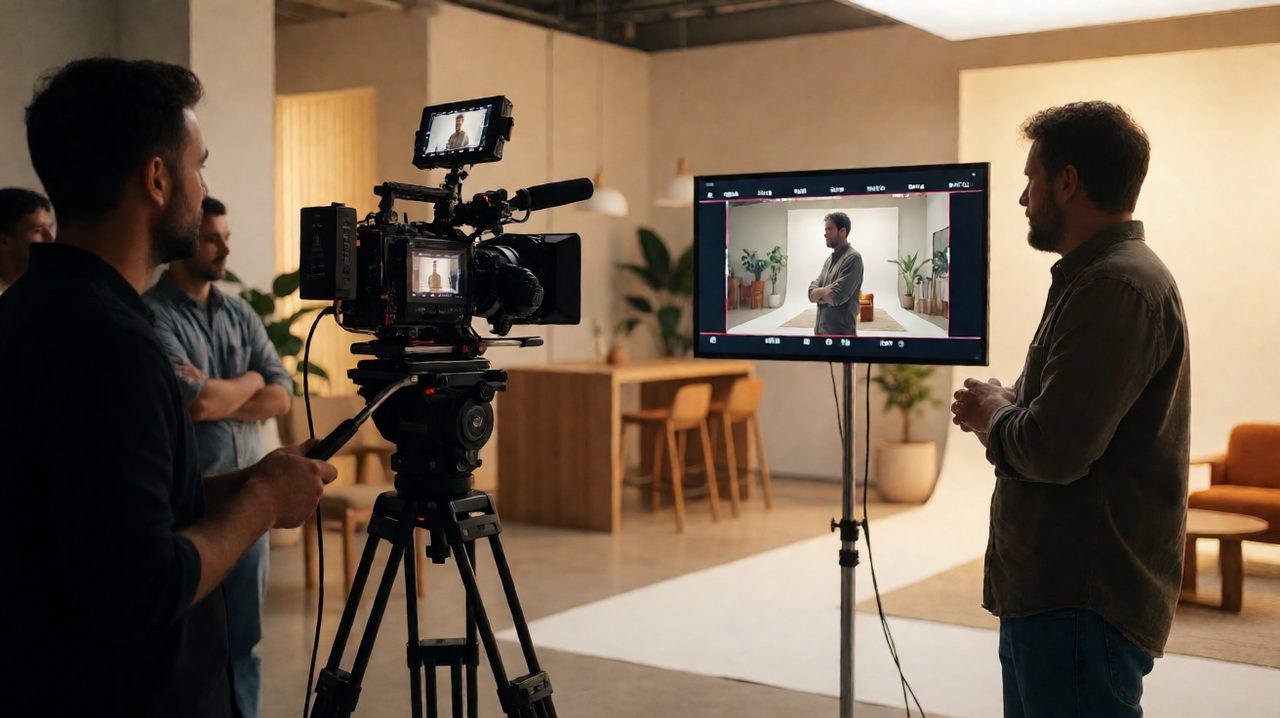
Most brands do not have a video problem. They have a distribution problem. A company will spend four weeks producing a polished hero commercial, post it once on LinkedIn and YouTube, then wonder why the view count stalls under a thousand. Production gets all the budget and distribution gets the leftover hour on a Friday. A real growth playbook flips that ratio. It treats the shoot as the starting line, and it treats distribution, sequencing, and measurement as the engine that pays for everything. Here is the system we use at Envy Creative to make every video work harder after the shoot wraps.
Strategy 1: Layer channels instead of picking one
Every video you make should ship in at least three places, with a different job for each placement. Your website gets the long-form cut, because that is where buyers compare options and where dwell time signals real intent. YouTube gets the search-optimized version, because it is the second largest search engine in the world and your competitors are already publishing there. Social gets the vertical cut, because that is where cold audiences meet your brand for the first time. Same footage, three placements, three different audiences. When a client tells us a video underperformed, the first thing we check is whether it lived in only one place. It usually did.
Strategy 2: Cut the hero into a content run
One shoot day should yield a month of distribution. Plan your shot list with atomization in mind from the start: the full brand film, then five to seven micro-cuts built from hooks, testimonials, product close-ups, and founder soundbites. Burn captions into every vertical cut, because most social video plays on mute. Release the cuts on a cadence, not all at once. Algorithms reward consistency, and your audience gets to encounter the same message from different angles. That repetition is how brands get remembered, and it costs you nothing beyond the edit.
Strategy 3: Sequence your retargeting
Cold traffic should never see the same creative your warm audience sees. Build a three-step sequence. Step one is a 15-second hook shown to broad audiences. Step two is a 30-second proof video, testimonials and results, shown only to people who watched half of the hook. Step three is a 30-second direct offer, shown only to people who watched half of the proof. Each step qualifies the next, so your budget stops introducing you to people who already know you. In our experience this is the highest-leverage video tactic for both DTC and B2B, and almost nobody runs it because it requires planning the funnel before the shoot instead of after.
If you want this kind of system built around footage that actually converts, Envy Creative designs video campaigns around distribution from day one, not as an afterthought tacked on in post.
Strategy 4: Make search engines read your video
Video SEO is still underpriced, and it compounds. Upload a real transcript, not the auto-generated one with the errors baked in. Add timestamped chapters so Google can index the sections of your video as separate answers. Write the title around the question your buyer actually typed, not the slogan your team loves. A product demo titled "How to Set Up Your First Studio Light" will outrank and outlast a brand anthem on every platform that matters. Social traffic spikes and dies. Search traffic stacks month after month, and every video you optimize makes the next one rank faster.
The five metrics that actually predict revenue
Vanity metrics make video look good in a slide deck and do nothing for the pipeline. Track these five instead, and make them the shared language between your creative team and your growth team.
1. View-through rate by placement. The same video will hold 70 percent on your landing page and 12 percent on social. Judge each placement against its own baseline, not a blended average that hides both stories.
2. Cost per qualified view. Divide spend by viewers who watched past 50 percent. In our experience this is the one paid metric that correlates with downstream conversion, because it measures attention, not impressions.
3. Comment and share rate. Likes are cheap. Comments and shares mean the video changed a mind. If these are flat, the message is wrong, not the budget. Fix the message before you raise spend.
4. Attributed pipeline and revenue. Tag video touchpoints in your CRM and give video partial credit across the journey. First-touch and multi-touch models both beat last-touch here, because video does its persuasion work long before anyone fills out a demo form.
5. Content decay rate. Watch when view velocity drops off. Most videos decay in 30 to 60 days. Schedule refresh cuts, a new hook or a new proof point, before the decay, not after it. A quarterly refresh beats an annual reshoot on cost every time.
Run a 30-day growth sprint
Turn the playbook into a sprint. Week one is the audit. Map every existing video to a channel and a funnel stage, and kill the placements getting zero qualified views. Week two is the cut-down. Ship micro-versions of your best performer to three placements each. Week three is the sequence. Launch the three-step retargeting funnel with a modest test budget and let the audience qualification do its job. Week four is the read. Keep what compounded, cut what decayed, and turn the winner into next month's hero brief. Thirty days, one loop, and you have a system instead of a gamble.
Video growth is not a talent problem. It is a systems problem, and systems beat inspiration every quarter. If you want a production partner that shoots with distribution in mind, talk to Envy Creative. We will make footage that works as hard on day 90 as it does on day one.