What Lionsgate's Runway AI Setback Teaches Brands About Better Video
Lionsgate's reported challenges with Runway AI are a useful reality check for business leaders: AI can help with ideation, storyboards, and workflow speed, but it is not a substitute for strategic, brand-safe, emotionally credible video production.
When a major studio with a 20,000-plus title library runs into trouble making AI-generated film assets, business leaders should pay attention. Not because every brand video needs Hollywood-level production, but because the same problem shows up in marketing every week: tools can create motion, but they do not automatically create trust, taste, timing, or a message that makes a buyer act.
The Lionsgate and Runway partnership was announced in September 2024 as a first-of-its-kind collaboration built around a custom AI model trained on Lionsgate's film and TV catalog. The promise sounded huge: cinematic video, faster pre-production, better post-production workflows, and potentially major cost savings. Recent reporting from TheWrap suggests the reality has been more complicated, with issues around training data, consistency, rights, workflow integration, and whether a single AI model can satisfy the needs of professional filmmakers.
The Hype Was Never the Real Strategy
I have sat in enough client calls to know the exact moment a shiny tool starts to sound like a strategy. Someone says, Could we just use AI for that? Sometimes the answer is yes. Sometimes it is yes for a mood board, storyboard, product angle, background cleanup, concept exploration, or faster rough cut. But if the goal is a video that persuades a real buyer, carries the brand, protects reputation, and looks premium in front of stakeholders, the tool is only one part of the system.
Lionsgate's challenge matters because it puts a high-profile spotlight on something production teams already understand. A finished video is not just pixels. It is performance, camera language, pacing, legal clearance, lighting, continuity, sound, edit judgment, brand position, and the small human choices that keep a scene from feeling hollow. AI can imitate pieces of that. It still struggles to own the whole thing cleanly.
Why One Model Is Not Enough
The most useful lesson for brand marketers is not that AI video is bad. It is that professional video outcomes require an ecosystem. A model may be decent at creating a stylized visual. Another may be stronger at cleanup. Another may help with transcripts, variations, or planning. But the final asset still needs a creative lead who knows what to accept, what to reject, and what will actually work for the audience.
That is especially true for business video. A product demo has to make the value clear fast. A testimonial has to feel credible, not staged. A founder video needs warmth without rambling. A social ad needs a hook that survives the first three seconds. A sales enablement video has to answer objections without feeling like a brochure. These are not just generation problems. They are direction problems.
- AI can accelerate exploration: Use it to test visual ideas, organize references, draft shot lists, and pressure-test creative routes.
- AI can reduce low-value friction: It can help with versioning, captions, rough storyboards, and internal concept alignment.
- AI cannot replace brand judgment: It does not know your buyer's skepticism, your sales process, or the exact emotional tone that makes your offer believable.
- AI output still needs ownership: Someone has to be responsible for taste, accuracy, rights, approvals, and performance.
The Buyer Does Not Care How Fast You Made It
Your audience does not reward you for making a video cheaply if the video feels cheap. They do not care that a tool saved three production days if the spokesperson looks uncanny, the product benefit is unclear, or the edit feels like every other AI-generated clip in their feed. Buyers are busy. They are skeptical. They are comparing you against competitors who may be saying almost the same thing.
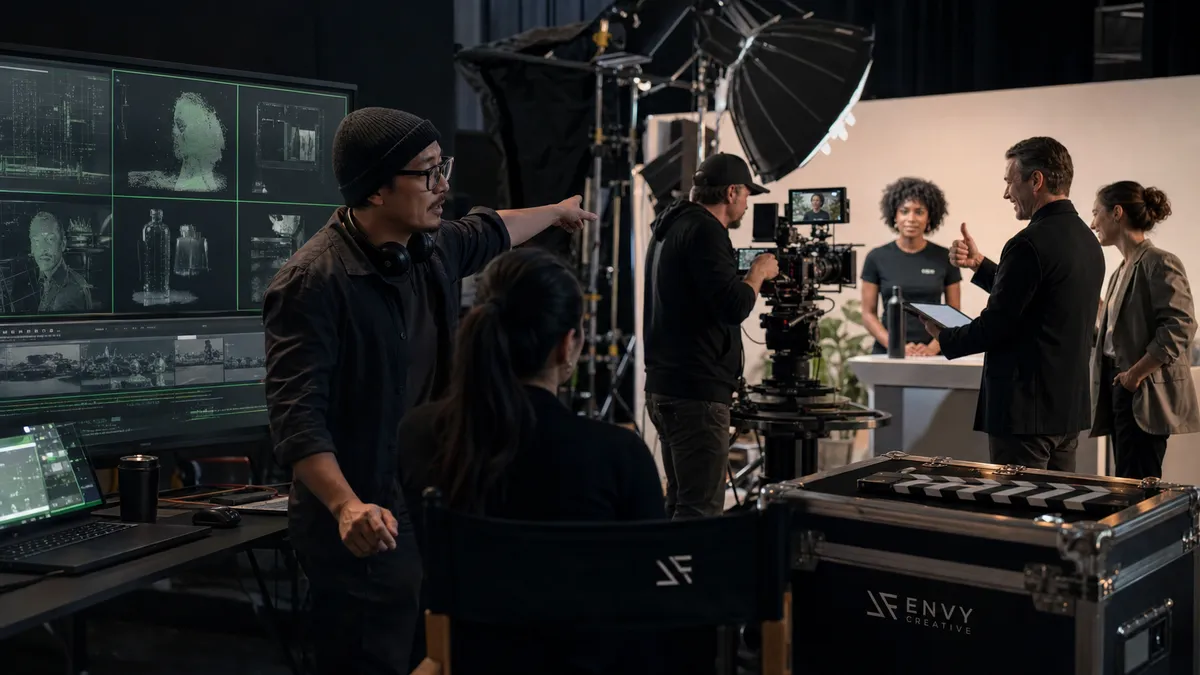
This is where custom production earns its keep. At Envy Creative, we look at video through the lens of what the asset has to do in the market. Is it supposed to generate leads, shorten sales cycles, explain a complex product, launch a new offer, support paid ads, improve a website conversion path, or give sales reps something stronger than a PDF? Once that job is clear, the production choices get sharper.
If you want that kind of strategy-first creative support, talk with Envy Creative about custom video content. The point is not to reject new tools. The point is to use them where they help, then surround them with the planning, direction, and production craft that make the final video worth putting in front of prospects.
Copyright And Control Are Boardroom Issues
The Lionsgate story also raises a less glamorous issue that matters a lot to businesses: control. If a studio is cautious about rights, likeness, training data, and copyright protection, brands should be too. A marketing team may not be dealing with movie stars, but it is still dealing with logos, product claims, customer likenesses, employee appearances, licensed music, third-party assets, and regulated promises.
For decision-makers, the question is not just Can this tool make something? The better question is Can we confidently publish it, defend it, and scale it? That means your workflow needs approvals, asset tracking, release forms, human review, and clear creative accountability. AI does not remove those responsibilities. In some cases, it makes them more important.
Where AI Actually Belongs In Brand Video
The smart move is not to pretend AI is useless. It is to put it in the right seat. For many businesses, AI belongs in pre-production and post-production support. It can help teams move faster before the shoot and clean up repetitive work after the shoot. It can help visualize an idea before committing budget. It can help generate alternate hooks, thumbnails, edit notes, and campaign variations. Used well, it can make a production team more efficient.
But the moments that make a video persuasive still tend to happen through human direction. A nervous customer relaxes because the producer asks the right follow-up question. A product looks premium because the gaffer shapes the light correctly. A founder sounds more credible because the director trims the scripted language and brings them back to a real story. A paid ad converts because the editor understands the hesitation the buyer feels before clicking.
A Practical Video Playbook For Business Leaders
If you are deciding whether to use AI, hire a production partner, or build a hybrid workflow, start with the business outcome instead of the tool. The clearer the outcome, the easier it is to decide where speed matters and where craft matters more.
- For internal concepts: AI-generated visuals can be useful for fast alignment before budget is committed.
- For public-facing brand films: Use a real production team for message, performance, lighting, sound, and final polish.
- For product videos: Prioritize clarity, accurate product handling, clean macro detail, and a conversion-focused script.
- For testimonials: Protect authenticity. Real customers, real context, and thoughtful interview direction beat synthetic polish.
- For paid social: Test multiple hooks and edits, but keep the core footage credible and specific to your offer.
The Real Takeaway From Lionsgate
Lionsgate's Runway roadblock is not proof that AI has no place in video. It is proof that high-stakes video is harder than prompt-in, movie-out. That should be encouraging for business leaders, not discouraging. You do not need to chase every new platform to make video that works. You need a clear message, a strong creative partner, and a production process that treats AI as assistance instead of autopilot.
For brands, the winning formula is simple: use technology to move faster, use strategy to decide what matters, and use human craft to make people care. That is how you get video that feels premium, earns trust, and supports revenue instead of becoming another forgettable experiment.
When your next campaign needs video that looks sharp, says something real, and is built around business results, work with Envy Creative on custom video content. We will help you choose the right format, shape the message, and produce assets your team can use across ads, sales, web, and social without gambling your brand on a tool that is not ready to carry the whole story.