How Small Online Stores Can Create Product Videos That Convert
A practical guide for small ecommerce brands on planning product videos that capture attention, answer buyer questions, and support sales across product pages, ads, and social channels.
Start with the buyer, not the camera
Small online stores often assume an engaging product video begins with a beautiful shot. It really begins with a clear buyer question. What does this do? Why is it better? Will it fit my life? If the first few seconds answer one of those questions, people keep watching. If they only see a slow logo reveal or a vague beauty shot, they leave before the product has a chance to sell itself.
When we plan product videos at Envy Creative, we usually start by listing the three things a customer must believe before they buy. For a skincare brand, that may be texture, routine, and visible result. For a kitchen product, it may be speed, cleanup, and size. That list becomes the creative brief. It keeps the video useful instead of merely pretty.
Make the first five seconds earn attention
Your opening should create instant context. Show the product solving a problem, reveal the most satisfying result, or place it in the exact situation your customer recognizes. A candle brand might open on a calm evening ritual. A desk organizer might open on a messy workspace becoming clean in one movement. A snack brand might open on the crunch, pour, or first bite.
I have seen small brands spend most of their energy on the middle of a video while treating the opening like a formality. The opposite usually works better. Nail the hook first, then let the rest of the story support it.
Build around useful shot types
A strong product video does not need dozens of random angles. It needs the right angles. For most small stores, a dependable shot list includes:
- Hero shot: a clean, attractive view that establishes the product.
- In-use shot: a person using it naturally so viewers understand scale and context.
- Detail shot: close-ups that show material, texture, finish, or function.
- Problem and solution shot: the before-and-after moment that makes the value obvious.
- Proof shot: packaging, portability, ingredients, compatibility, or another detail that reduces hesitation.
This is where many homemade videos fall short. They show what the product looks like, but not enough of what owning it feels like.
Let the product move
Motion creates attention, but the best motion is motivated. Pour it, open it, fold it, wear it, stack it, light it, squeeze it, or let it catch the light as it turns. If the product itself is not naturally dynamic, create movement through hands, camera motion, or the environment around it. The goal is to make the item feel alive without making the edit feel frantic.
For ecommerce, this is especially important because shoppers cannot touch the product. Good video becomes the closest substitute. It gives them shape, weight, scale, and a little bit of confidence before they click buy.
Keep the story simple enough to remember
One video should usually make one main promise. Trying to explain every feature, every color, every offer, and every use case often leaves viewers remembering none of them. A tighter structure is easier to absorb:
- Open with the need or result.
- Show the product in action.
- Highlight two or three reasons it stands out.
- End with the next step.
If you need to say more, make more videos. A product page video, a paid social cut, a testimonial edit, and a how-it-works clip can all support the same sale without forcing one asset to do every job.
Design for where the video will live
A product page video and a short social ad are siblings, not twins. The product page version can breathe a bit more and answer practical questions. A vertical social version needs faster pacing, stronger visual resets, and framing that still reads clearly on a phone. Marketplace listings often need clarity above all else. Before production starts, decide where each cut will appear so the camera plan, framing, and edit are built for the destination.
If you are investing in custom content and want the footage to work across your store, ads, email, and social, this is where planning pays off. Envy Creative creates custom video content with enough strategic coverage to turn one shoot into a family of usable assets instead of one expensive file.
Use people when people help the sale
Not every product needs a spokesperson, but many products benefit from a human presence. Hands using the item can clarify size. A face can create trust. A model can show fit, comfort, or lifestyle. The key is relevance. If the person adds meaning, include them. If they only distract from the product, keep the frame cleaner.
This is one reason customer-style footage performs so well when it is done thoughtfully. It feels close to real shopping behavior. Viewers want to imagine the product in their own routine, not just admire it on a seamless backdrop.
Polish matters more than people admit
Small stores sometimes hear that authentic content means rough content. It does not. Authentic means believable. Lighting should still flatter the product. Colors should still look accurate. Audio should still be clean. Editing should still guide the eye. Even a simple video feels premium when the surfaces are tidy, the frame is intentional, and the viewer never has to work to understand what is happening.
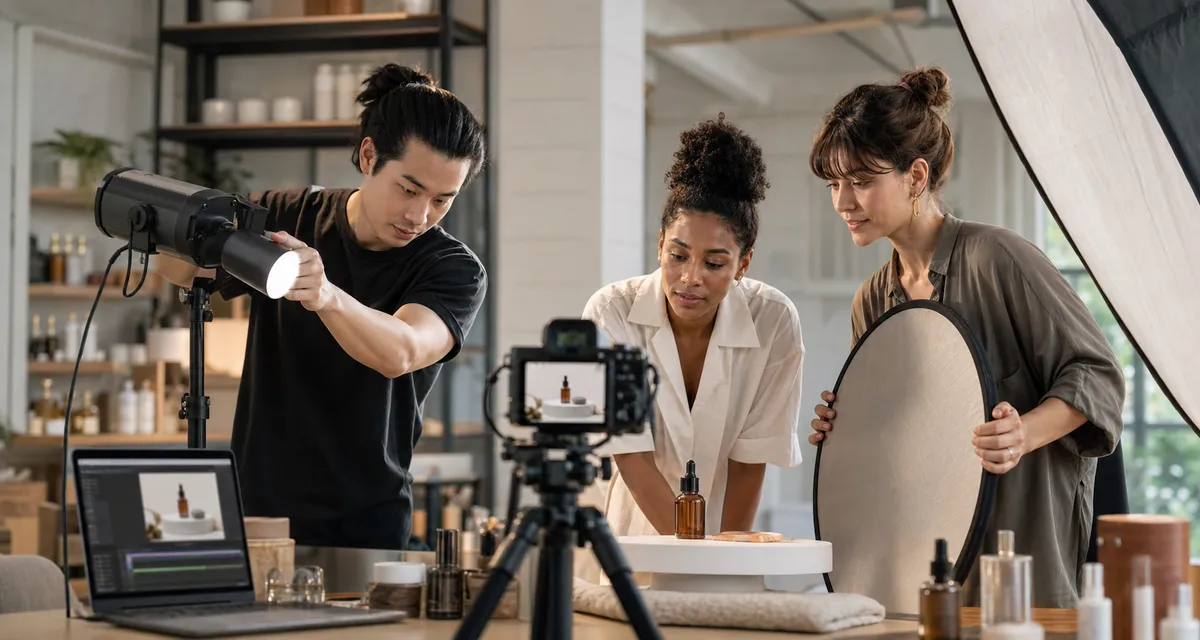
The easiest upgrade is usually better lighting, followed by better art direction. A modest product can look elevated when the setting, props, hands, wardrobe, and color palette all belong to the same world.
Answer the objections before they become exits
Think about the questions that stop a sale and weave the answers into the visual story. Is it easy to assemble? Show it. Is it compact? Put it next to a familiar object. Does it come in multiple shades? Reveal them cleanly. Is the material soft, sturdy, or waterproof? Demonstrate it instead of merely claiming it.
Great product videos quietly remove friction. They do not feel like a lecture, but by the end, the buyer has fewer unanswered questions than when they arrived.
Plan one shoot for a full content system
The most efficient small-store productions are not built around a single deliverable. They are built around a library. With the right planning, one shoot can produce a hero video, homepage loops, product-page clips, vertical ads, cutdowns, thumbnails, and stills. That is usually a smarter use of budget than filming one polished video now and starting from scratch again next month.
Before the camera rolls, decide what formats you need, what claims you need to support, what seasonal offers may come later, and what evergreen shots will stay useful for months. A good creative director is always thinking a few edits ahead.
What engaging really means
An engaging product video is not simply one that looks expensive. It is one that makes the right customer understand, want, and trust the product faster. For small online stores, that means clarity first, emotion second, polish throughout. If the concept is sound, the product is shown honestly, and every shot earns its place, the video has a much better chance of turning attention into revenue.
If you want help turning your products into a stronger visual sales system, work with Envy Creative on custom product video content that is built for modern ecommerce, not just for looking good in a portfolio.