Differences Between a $100, $1,000, and $10,000 Video
A Creative Director breaks down what actually changes as video budgets scale, from a $100 phone shoot to a $10,000 commercial production, and how to pick the right tier for your goal.
Ask ten creators what a video should cost and you will get ten different answers. One founder swears by his phone. Another just paid five figures for a thirty second spot. Both might be right, or both might be burning money. The difference is knowing what each tier actually buys you.
I have worked across all three budget tiers for over a decade, as a Creative Director at a full service commercial studio. Here is the honest breakdown of what a $100 video gets you, what changes at $1,000, and why the jump to $10,000 exists at all.
The $100 Video: Speed and Raw Energy
A hundred dollars buys you one person, one phone, and one afternoon. That person is usually you, and the hundred dollars covers a decent tripod, a lav mic, and maybe a cheap ring light you will use exactly twice.
This tier lives and dies on authenticity. For lo-fi UGC, founder talking-head content, and quick social proof, raw is a feature, not a bug. Audiences on TikTok and Reels have been trained to trust the shaky handheld look. If your goal is volume, testing hooks, or sounding like a real person instead of a brand, $100 is a totally rational spend.
The hard limits show up fast though. Sound is inconsistent. Lighting changes between takes. There is no script worth mentioning, no casting, no art direction, and no plan for the second take when the first one flopped. You also get exactly one angle and one delivery style. If the concept fails, the whole thing fails, because there was nothing on the production side holding it up.
Buy this tier when: you need volume for organic testing, the message matters more than the production value, and you can shoot again tomorrow if it does not work.
The $1,000 Video: The Craft Multiplier
At $1,000, you hire a real videographer for the day. Suddenly you have professional cameras, intentional lighting, clean audio, and someone whose actual job is making footage look good. It is the same concept as the $100 video, executed ten times better.
This is where lighting design enters the picture. A $1,000 shoot has a key light, a fill, maybe a rim light for separation. Skin tones look natural. Products look like the real thing instead of a washed out blob. The audio is captured properly, which matters more than most founders realize, because bad audio is the number one reason viewers click away.
You also get basic structure: a shot list, a few locations or angles, simple editing with actual pacing, and licensed music. The video stops looking like a favor from a friend and starts looking like something a customer can trust.
The ceiling at this tier is people and planning. One videographer is still one brain. There is no dedicated director watching performance, no art department styling the set, no casting process, and no sound designer in post. When you work with a team that lives at this level every day, like the crew at Envy Creative, you can squeeze remarkable polish out of a lean day rate, but the schedule still limits what is possible in a single shoot.
Buy this tier when: you have a proven concept, you need it to look trustworthy on a landing page or ad, and one strong day of coverage will cover it.
The $10,000 Video: A Production, Not a Shoot
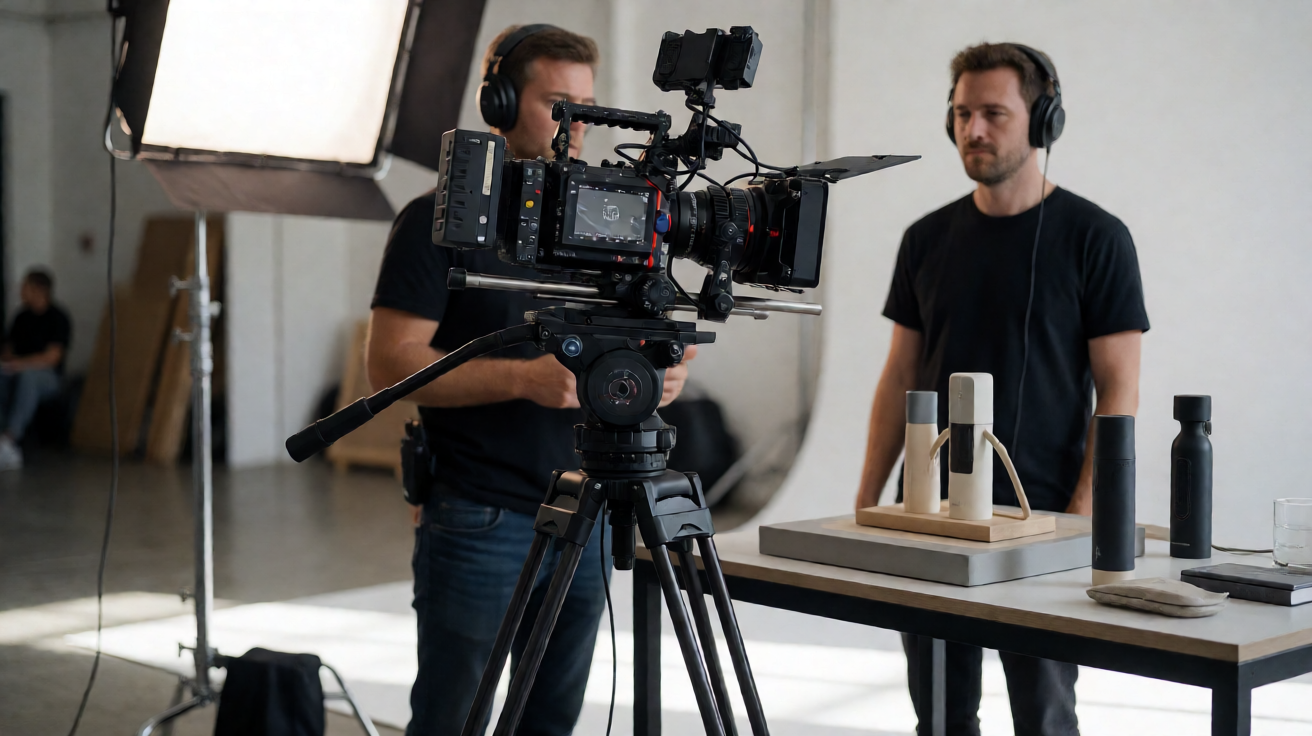
At $10,000, you are no longer hiring a videographer. You are hiring a production: a director, a producer, camera department, lighting department, art direction, casting, location, and a real post pipeline. Every decision that was improvised at the lower tiers now has a professional attached to it.
The differences are compounding. Casting means your on-camera talent actually sells the performance instead of reading lines. Art direction means the set tells part of the story before anyone speaks. Professional cinematography means motion, lens choice, and composition are doing emotional work, not just capturing information. And sound design in post, the layer most viewers never notice consciously, is what makes a spot feel premium.
This is the tier where the concept gets stress tested before a single frame is shot. Storyboards, preproduction calls, and location scouts exist to kill bad ideas cheaply on paper instead of expensively on set. That planning is invisible in the final video, which is exactly the point.
Does every brand need it? No. But when the video anchors a launch, a hero section, or a paid campaign with real spend behind it, production value becomes a conversion lever. Audiences judge your product by your video before they judge it by your reviews.
Buy this tier when: the video carries revenue, the creative needs to be bulletproof, and the cost of looking amateur is higher than the cost of production.
So Which One Do You Need?
Here is the shortcut I give every founder who asks:
- Testing the message? Shoot the $100 version. If the hook works on a phone, it will work at any budget.
- Scaling a proven winner? Move to $1,000 for trust and polish.
- Betting the quarter on it? Go $10,000, because at that point production is insurance on your media spend.
The most expensive video is the one you have to reshoot, so pick the tier that matches the stakes the first time. And if you are weighing a project in that upper tier, talk to Envy Creative. We will tell you honestly whether you need the full production or just a really good shoot day.